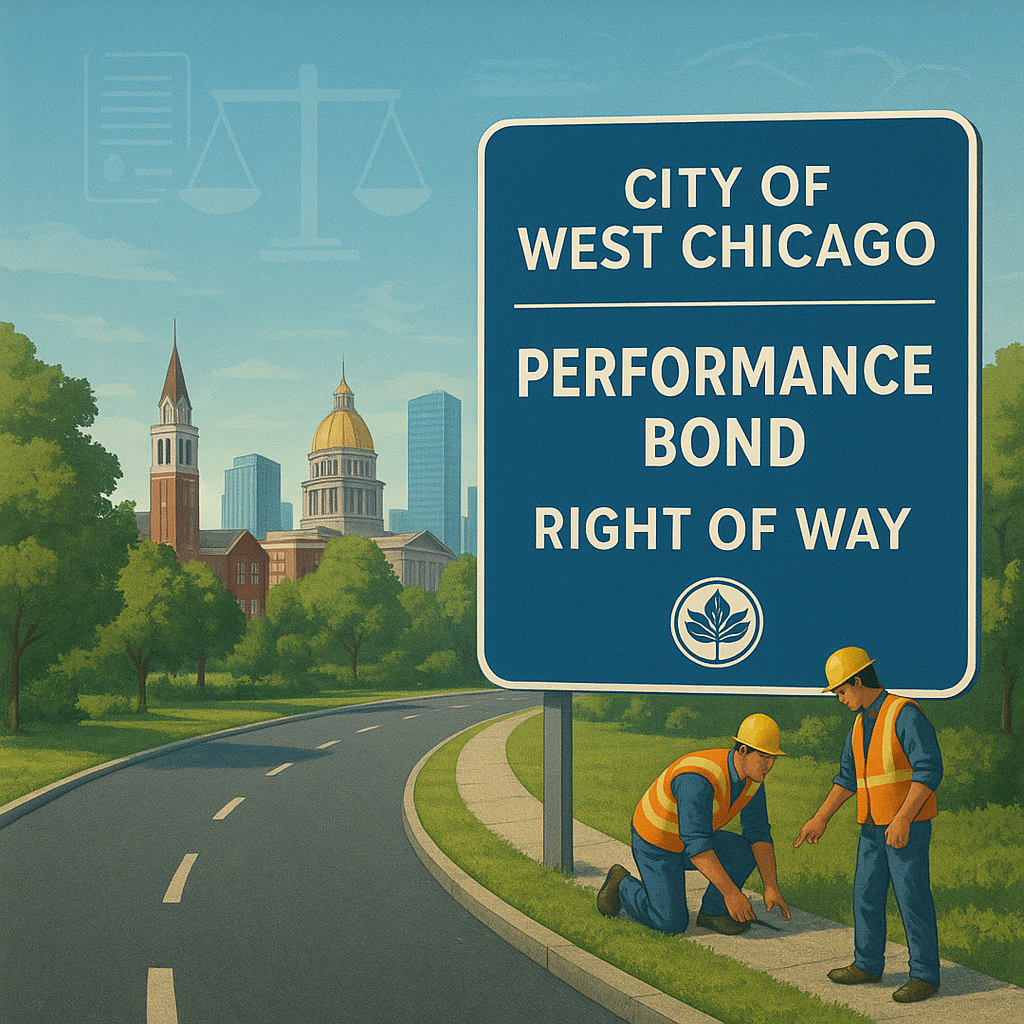
If you’re a contractor, utility company, or property owner planning work in a public street, sidewalk, or parkway in West Chicago, Illinois, you may need a right of way performance bond. It sounds like a mouthful, but the idea is simpler than it seems. Think of it as a financial promise that the work will be done properly and the public area will be put back in good condition.
Whether you’re installing a new sewer line, repairing a water main, laying fiber optic cable, or building a driveway approach, the City of West Chicago wants to make sure its public spaces are protected. That’s exactly what this bond is for.
What Is a Right of Way Performance Bond?
A right of way performance bond is a type of surety bond. It guarantees that a contractor or property owner will complete work in a public right of way according to the city’s rules and approved plans. If the work isn’t finished correctly, or the area isn’t restored, the bond can be used to cover the cost of fixing things.
There are three main parties involved:
- The principal: This is the contractor, utility company, or property owner doing the work.
- The obligee: This is the City of West Chicago, which requires the bond to protect public property.
- The surety: This is the company that backs the bond and promises to pay if the principal fails to meet the requirements.
A helpful way to think about it is like a security deposit on a rental property. You put money down to show you’ll follow the rules. If you damage something or leave the place a mess, the landlord can use that deposit to fix it. A performance bond works in a similar way, but instead of a cash deposit, a surety company provides a financial guarantee.
Why Does West Chicago Require These Bonds?
The City of West Chicago manages many miles of public right of way. That includes streets, sidewalks, parkways, alleys, and utility strips. When someone digs into those areas, there’s always a risk of damaging pavement, curb, gutter, landscaping, or underground utilities.
The city requires a performance bond to make sure taxpayers don’t end up paying for repairs caused by a contractor’s poor work or unfinished job. It also helps keep the community looking good and functioning safely. Nobody wants a pothole-riddled street or a collapsed trench months after a project wraps up.
So, the bond isn’t just a box to check. It’s a real protection for the public and a way to hold contractors accountable.
How Does a Right of Way Performance Bond Work?
Let’s walk through a practical example.
Imagine you’re a contractor hired to replace a water service line under a residential street in West Chicago. Before the city issues your permit, they ask for a performance bond in the amount of the estimated restoration cost. You contact a surety bond agency, fill out an application, and get approved. The surety issues the bond, and you file it with the city.
Now you start digging. The street is cut, the pipe is replaced, and you backfill the trench. But let’s say you rush the final paving, and six weeks later the asphalt sinks. The city sees the problem and contacts you. If you don’t fix it, the city can file a claim against the bond. The surety then steps in to either make sure the repair is completed or pay the city to hire someone else.
In other words, the bond is a safety net for the city if the contractor drops the ball.
Who Needs a Right of Way Performance Bond in West Chicago?
Not every small project needs one. The requirement usually applies to larger jobs or work that significantly disturbs the public right of way. Common examples include:
- Utility installation or repair, including water, sewer, gas, electric, and telecom lines.
- Road and sidewalk construction or reconstruction.
- Driveway approach installation that crosses a public sidewalk or parkway.
- Grading or drainage work that affects a public street or alley.
- Excavation for new building connections near the street.
If you’re not sure whether your project requires a bond, it’s best to check with the City of West Chicago’s engineering or public works department. They can tell you the exact amount and form the bond should take.
How Much Does a Performance Bond Cost?
The cost of a performance bond depends on the bond amount the city requires. That amount is usually based on the estimated cost of restoring the right of way. For example, if the city estimates that a failed project could cost $20,000 to repair, they might ask for a $20,000 bond.
But you don’t pay the full bond amount upfront. Instead, you pay a small percentage called a premium. For most contractors with good credit, the premium is between 1% and 3% of the bond amount per year.
So for a $20,000 bond, you might pay somewhere around $200 to $600, depending on your credit, business history, and the surety’s underwriting guidelines.
Larger projects with higher bond amounts may have lower premium percentages, but they can still add up. It’s smart to include the bond cost in your project estimate.
What Happens If Something Goes Wrong?
If the contractor fails to finish the work or restore the right of way properly, the City of West Chicago can file a claim against the bond. The surety company then investigates the claim. They may ask the contractor to fix the problem first. If the contractor won’t or can’t, the surety steps in.
The surety might hire another contractor to finish the job or pay the city for the cost of repairs. After that, the surety will seek reimbursement from the original contractor because a bond is not insurance. The contractor is still ultimately responsible for the cost.
This is an important distinction. Insurance protects the policyholder. A surety bond protects the city and the public, but the contractor remains financially on the hook.
How to Get a Performance Bond in West Chicago
The process is usually straightforward if you work with an experienced surety bond agency. Here’s what you can typically expect:
- Confirm the requirement: Ask the City of West Chicago for the exact bond form, amount, and any special conditions.
- Gather your information: You’ll need basic business details, project information, and sometimes financial statements for larger bonds.
- Apply with a surety agency: The agency will shop your application to different surety companies to find the best rate.
- Pay the premium: Once approved, you pay the premium, and the bond is issued.
- File the bond with the city: Submit the original bond document to the city before your permit is issued.
For smaller bonds, approval can be quick and may not require detailed financials. Larger bonds often take more time and may require more documentation.
Common Questions About Right of Way Bonds
Is a performance bond the same as insurance?
No. A performance bond is a guarantee that you’ll complete the work according to the agreement. If a claim is paid, the surety will expect you to repay them. Insurance, on the other hand, covers losses without necessarily requiring reimbursement.
How long does the bond stay in effect?
The bond usually remains in effect until the city inspects the work and formally releases the bond. That might be after a final walkthrough, a warranty period, or once the restoration is accepted.
Can I get a bond with less-than-perfect credit?
Yes, in many cases. You may pay a higher premium, but some surety agencies specialize in helping contractors with challenged credit. The key is to work with an agency that understands construction bonds and Illinois local requirements.
What if I don’t get a bond?
If the city requires a bond and you don’t provide one, your project can’t move forward. Permits may be denied, and you could face delays or penalties. It’s always better to ask early and plan ahead.
Why This Bond Matters for Your West Chicago Project
For a contractor, a right of way performance bond is more than just a permit requirement. It shows the city and your clients that you’re serious about doing quality work. It also helps protect your business from costly disputes by setting clear expectations from the start.
For the City of West Chicago, these bonds help keep streets safe, sidewalks accessible, and public spaces well-maintained. They ensure that private work in public areas doesn’t become a public burden later.
If you’re planning a project in West Chicago, Illinois, don’t let the bond requirement catch you off guard. Reach out to the city early, understand what’s required, and line up a reliable surety bond agency. A little planning can save you time, money, and headaches down the road.