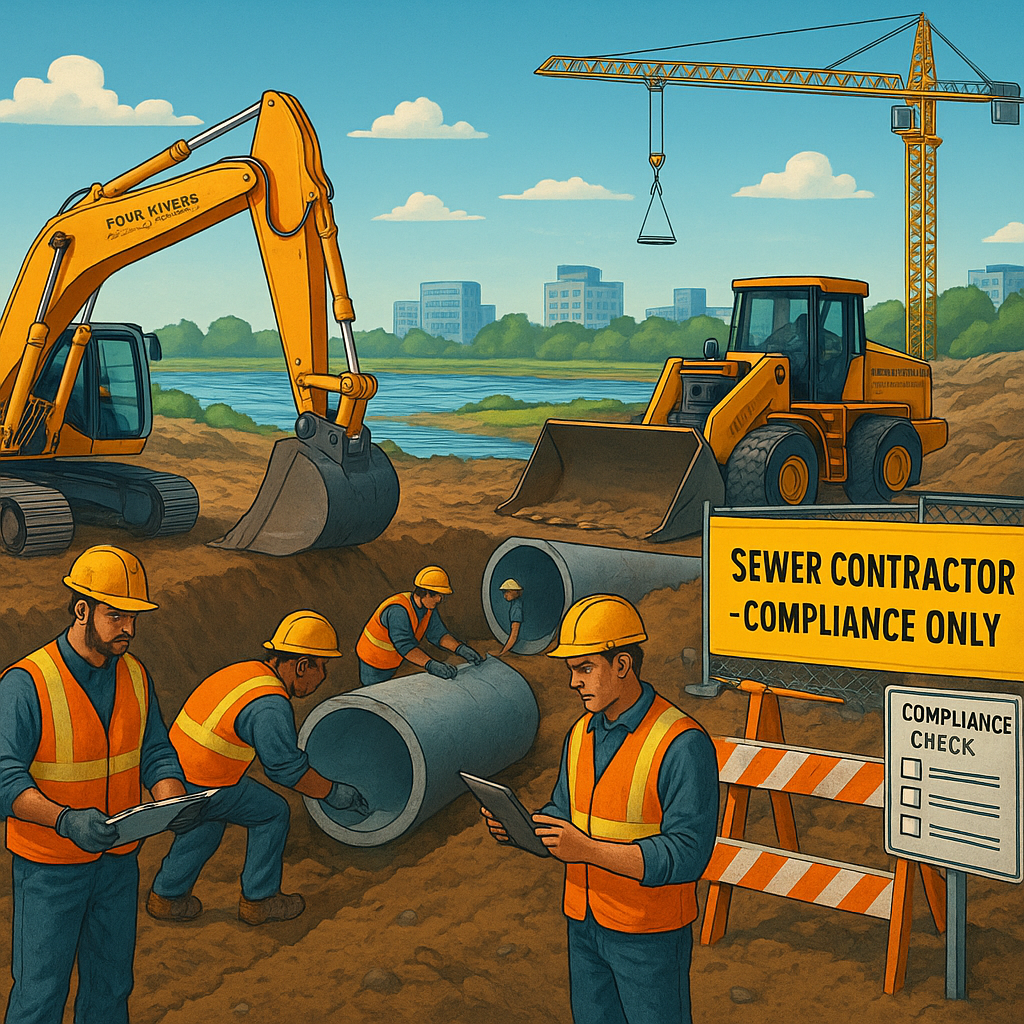
It’s easy to overlook the miles of pipes running beneath our feet. Yet these quiet workhorses carry wastewater away from homes, businesses, and schools every single day. In Illinois, the Four Rivers Sanitation Authority works to keep that system safe and dependable. A recent sewer project has brought renewed attention to an important piece of the puzzle: the Four Rivers Sanitation Authority Construction of Sewer-Contractor Bond. But what does that bond really mean? And why should everyday residents care?
What Does the Four Rivers Sanitation Authority Do?
The Four Rivers Sanitation Authority manages wastewater collection and treatment for communities in northern Illinois. Think of them as the guardians of the underground world. They make sure that when you flush, shower, or run the dishwasher, the water goes where it should. Their work protects public health, keeps local waterways cleaner, and supports everyday life in a way most of us never see.
When sewer lines need to be repaired, replaced, or expanded, the authority often works with outside contractors. These are the crews that dig trenches, lay pipe, and restore roads. But big public projects come with big responsibility. That’s where the Construction of Sewer-Contractor Bond becomes essential.
Understanding the Construction of Sewer-Contractor Bond
A Construction of Sewer-Contractor Bond is a type of surety bond. In simple terms, it is a financial promise that a contractor will follow the rules. It helps protect the public, the sanitation authority, and the community at large.
Think of a bond like a security deposit. When you rent an apartment, you put down money to show you will take care of the place. If you leave a giant hole in the wall, the landlord can use that deposit to fix it. A contractor bond works in a similar way. It gives the Four Rivers Sanitation Authority a safety net if a contractor fails to meet their obligations.
What Does “Compliance Only” Mean?
The bond in this project is often labeled as “Sewer Contractor – Compliance Only.” That phrase can feel a little confusing, but it is simpler than it sounds. A compliance bond focuses on making sure the contractor follows all applicable laws, codes, and regulations.
This is different from a performance bond, which guarantees the entire project will be finished. A compliance bond is more about doing the work the right way. It covers things like:
- Following local building codes and safety standards
- Protecting public property during construction
- Meeting environmental rules for wastewater and runoff
- Restoring streets, sidewalks, and yards after digging
- Honoring the specific agreement made with the sanitation authority
In other words, the Sewer Contractor – Compliance Only bond acts like a written promise that the contractor will color inside the lines.
Why a Sewer Contractor Bond Matters to Residents
You might be thinking, “This sounds like paperwork for lawyers and contractors. Why does it matter to me?” That is a fair question. But the answer hits close to home.
Have you ever driven past a construction site and wondered if the road would be fixed properly? Or worried about what might happen if a contractor damaged a water line and walked away? Bonds create accountability. They help make sure someone is on the hook to correct mistakes.
For a project involving the Four Rivers Sanitation Authority, the bond helps protect homeowners, business owners, and taxpayers. It reduces the chance that a half-finished job or a code violation becomes the community’s problem. That protection keeps infrastructure reliable and helps avoid costly repairs down the road.
How the Bond Works in Real Life
Let’s use a practical example. Imagine a contractor is hired to work on a sewer line under a busy street. They break up the pavement, dig down to the pipe, and make the repairs. But while doing the work, they fail to follow proper safety barriers or do not restore the roadway to city standards. Without a bond, the sanitation authority might have to chase down the contractor or pay for fixes with public money.
With a Construction of Sewer-Contractor Bond in place, there is a clear path to resolution. The authority can file a claim against the bond. The surety company that issued the bond then steps in to investigate. If the claim is valid, the surety pays to help correct the issue. The contractor is ultimately responsible for repaying the surety. This keeps public projects moving and protects taxpayer dollars.
Compliance and Public Safety Go Hand in Hand
Sewer work is not glamorous, but it is vital. A small mistake underground can lead to big problems above ground. Poorly installed pipes can collapse. Improper stormwater handling can pollute local rivers. Unmarked trenches can create dangerous conditions for pedestrians and drivers.
Compliance bonds encourage contractors to slow down and follow the rules. They know that if they cut corners, there are financial consequences. That sense of accountability helps keep communities safer and keeps the sewer system working as it should.
The Four Rivers Sanitation Authority understands that infrastructure is about more than concrete and pipes. It is about trust. When a contractor agrees to a compliance-only bond, they are showing they take that trust seriously.
What This Sewer Project Means for Illinois Communities
The completed sewer project highlights the importance of strong infrastructure investment. Clean, reliable sewer service supports public health, economic growth, and quality of life. A well-maintained system can handle heavy rain, prevent backups, and protect local waterways from pollution.
By requiring a Sewer Contractor – Compliance Only bond, the Four Rivers Sanitation Authority helps make sure every project meets high standards. This approach reduces risk and builds confidence among residents. It also sets a clear example for other municipalities in Illinois that want to protect their communities.
What Happens After the Sewer Project Is Complete?
Once the heavy equipment leaves and the road is patched, the work is not truly finished. Final inspections take place to confirm that everything meets the required standards. The bond remains in place for a set period to cover any hidden compliance issues. This gives the authority and the public extra peace of mind.
If any problems come to light after the project wraps up, the bond can still provide a remedy. That is one of the biggest benefits of using a surety bond. It extends trust beyond the final handshake.
Questions People Often Ask
Here are a few common questions that come up when talking about sewer contractor bonds.
Who pays for the bond?
The contractor obtains and pays for the bond. The cost is usually a small percentage of the total bond amount. It is simply part of doing responsible business.
Does the bond protect the contractor?
Not exactly. The bond protects the public and the project owner. However, a good compliance record can help contractors build trust and win more work. So in the long run, it benefits everyone.
Is this the same as insurance?
No. Insurance protects the contractor from their own losses. A bond protects the project owner and the public from contractor failures. They work together but serve different purposes.
Building Better Infrastructure Through Accountability
Good infrastructure does not happen by accident. It takes planning, investment, and a firm commitment to doing things the right way. The Four Rivers Sanitation Authority’s sewer project is a reminder that behind every functioning system are contractors, inspectors, and public agencies working together.
The Construction of Sewer-Contractor Bond might not make headlines, but it plays a starring role behind the scenes. It keeps contractors accountable, protects public funds, and supports the long-term health of Illinois communities. So the next time you see a sewer project in your neighborhood, you will know a little more about the hidden safeguards that keep everything flowing smoothly.