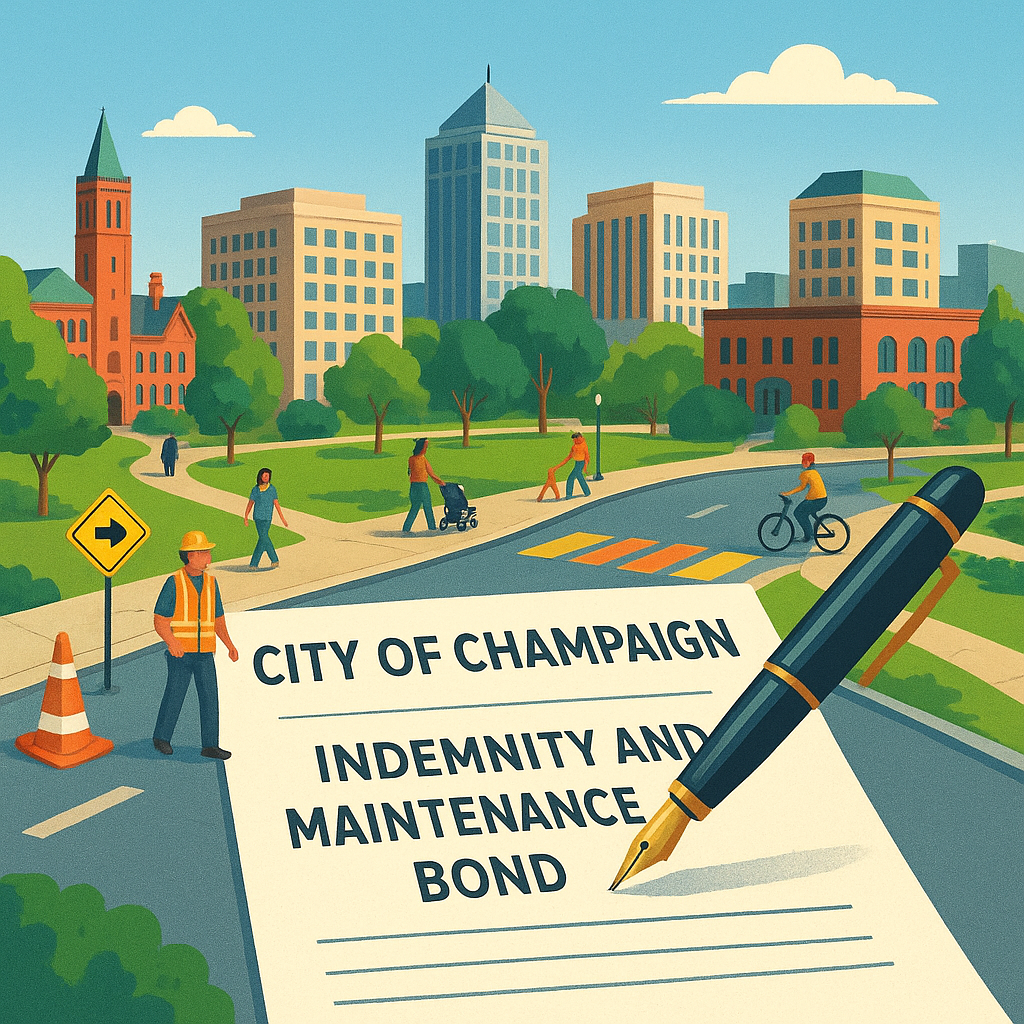
If you’ve ever watched a construction crew tear up a street, install a new water line, or replace a sidewalk in Champaign, Illinois, you’ve probably wondered: Who makes sure everything gets put back the right way? That’s where the City of Champaign Indemnity and Maintenance Bond steps in. It’s a financial safety net that protects public property and local taxpayers when work happens in the public right of way.
This type of bond can sound complicated at first, but the idea behind it is surprisingly simple. Let’s walk through what it is, why it matters, and how it affects contractors, property owners, and everyday residents in Champaign.
What Is the Public Right of Way, Anyway?
Before diving into the bond itself, it helps to understand the public right of way. In simple terms, the right of way is the land owned by the city or the public that runs along streets, sidewalks, parkways, and alleys. It’s the space where utilities like water, sewer, gas, electric, and internet lines often live.
When someone needs to dig into that space or make changes to it, they’re working on property that belongs to everyone. That’s a big deal. A private contractor can’t just tear up a sidewalk or cut into a street without the city making sure the work is done safely and repaired properly.
What Is an Indemnity and Maintenance Bond?
An indemnity and maintenance bond is really two protections wrapped into one document. Think of it like a security deposit for public property.
The indemnity part is a financial promise. It says that if the contractor or property owner damages city property, fails to complete the work, or leaves a dangerous mess behind, the city can use the bond money to fix the problem. It protects the city from having to dip into taxpayer funds for repairs caused by someone else.
The maintenance part goes a step further. It guarantees that the work will hold up for a certain period after the project is done. If a freshly patched street sinks, a new sidewalk cracks, or a utility line fails soon after installation, the bond can help cover the cost of repairs during that maintenance window.
In other words, this bond says: “We’ll do the work right, and if it doesn’t hold up, the money is there to make it right.”
Why Does the City of Champaign Require This Bond?
The City of Champaign requires an indemnity and maintenance bond to protect public infrastructure and public dollars. Streets, sidewalks, curbs, gutters, and underground utilities are expensive to build and repair. If a private project damages them or leaves them in poor condition, someone has to pay for the fix.
Without a bond, the city might have to chase down a contractor or property owner for payment. That process can take months or even years. With a bond in place, the city has a clear path to recover costs and ensure repairs happen quickly.
For residents, this means fewer potholes, fewer uneven sidewalks, and fewer unexpected tax increases caused by someone else’s sloppy work. It’s a common-sense safeguard that keeps Champaign’s public spaces safe and well-maintained.
Who Typically Needs This Bond?
If you’re planning a project that involves digging into or altering the public right of way in Champaign, you’ll likely need this bond. Common examples include:
- Utility companies installing or repairing water, sewer, gas, or electric lines
- Telecommunications companies laying fiber optic cable or internet infrastructure
- Contractors replacing driveways, sidewalks, curbs, or gutters that connect to public streets
- Developers adding new streets, alleys, or public access points
- Property owners doing major excavation near the right of way
Essentially, if your project touches public land, the city wants to know that the public will be protected from start to finish.
How Does the Bond Process Work?
Getting a City of Champaign Indemnity and Maintenance Bond is usually part of the permit process. Here’s a step-by-step look at how it works.
First, the contractor or property owner applies for a right of way permit with the city. The city reviews the project plans and determines what kind of bond amount is needed. The bond amount often depends on the size and scope of the work.
Next, the applicant works with a surety bond company to obtain the bond. The surety company checks the applicant’s credit, experience, and financial stability. Once approved, the bond is issued and filed with the city.
Then the project begins. If the work damages public property, the city can file a claim against the bond. If the contractor fails to complete the job or doesn’t pass inspection, the bond can also be used to cover those costs.
After the project is finished, the maintenance period begins. During this time, the bond remains active. If everything holds up and the city signs off at the end of the maintenance period, the bond is released.
How Much Does a Champaign Right of Way Bond Cost?
Many people think they need to pay the full bond amount out of pocket. That’s not usually the case. A bond is more like a line of credit than a direct payment. You pay a small percentage of the total bond amount, known as the bond premium.
For example, if the city requires a $50,000 bond, you might pay a premium of 1% to 5% per year, depending on your credit and financial history. That means your out-of-pocket cost could range from $500 to $2,500 annually. Strong credit and solid business financials typically mean lower premiums.
The exact bond amount required by the City of Champaign varies based on the project. Small sidewalk repairs may need a smaller bond, while large utility or street reconstruction projects can require much higher amounts.
Common Questions About Right of Way Bonds in Champaign
Is This the Same as Liability Insurance?
No, a bond and insurance are different. Insurance protects the contractor or property owner from their own losses. A bond protects the city and the public from the contractor or property owner’s failure to meet their obligations. If a claim is paid on a bond, the bonded party usually has to repay the surety company.
What Happens If the Work Fails After a Year?
That depends on the maintenance period outlined in the bond. In Champaign, the maintenance period often lasts one to two years after project completion. If the work fails during that period, a claim can be made. After the period ends, the responsibility for ongoing maintenance typically shifts back to the city or the property owner, depending on the situation.
Can a New or Small Contractor Get Bonded?
Yes, many small and new contractors can get bonded. The premium may be slightly higher if the business has limited credit history, but working with a knowledgeable surety agent can help. Building a track record of completed projects and maintaining good credit will improve bonding options over time.
Tips for Contractors and Property Owners
If you need a right of way bond in Champaign, a little preparation goes a long way. Start the bonding process early so it doesn’t delay your permit. Gather your financial documents, business records, and project details before reaching out to a surety provider.
Shop around for bond quotes, but don’t choose based on price alone. Look for a surety company that understands municipal bonds and can explain the process clearly.
Most importantly, follow the city’s specifications from day one. The best way to avoid a bond claim is to do the job correctly the first time. Communicate with city inspectors, keep the work area safe, and complete repairs to the required standards.
A Safety Net for Champaign’s Public Spaces
The City of Champaign Indemnity and Maintenance Bond might not be the most exciting part of a construction project, but it plays a huge role in keeping the city functional and attractive. It holds contractors accountable and gives the city a practical way to fix problems without burdening local taxpayers.
So the next time you see road work or a sidewalk replacement in Champaign, you’ll know there’s a financial promise behind that project. It’s a promise that the work will be done right, the public will be protected, and Champaign’s right of way will remain safe and well-maintained for years to come.