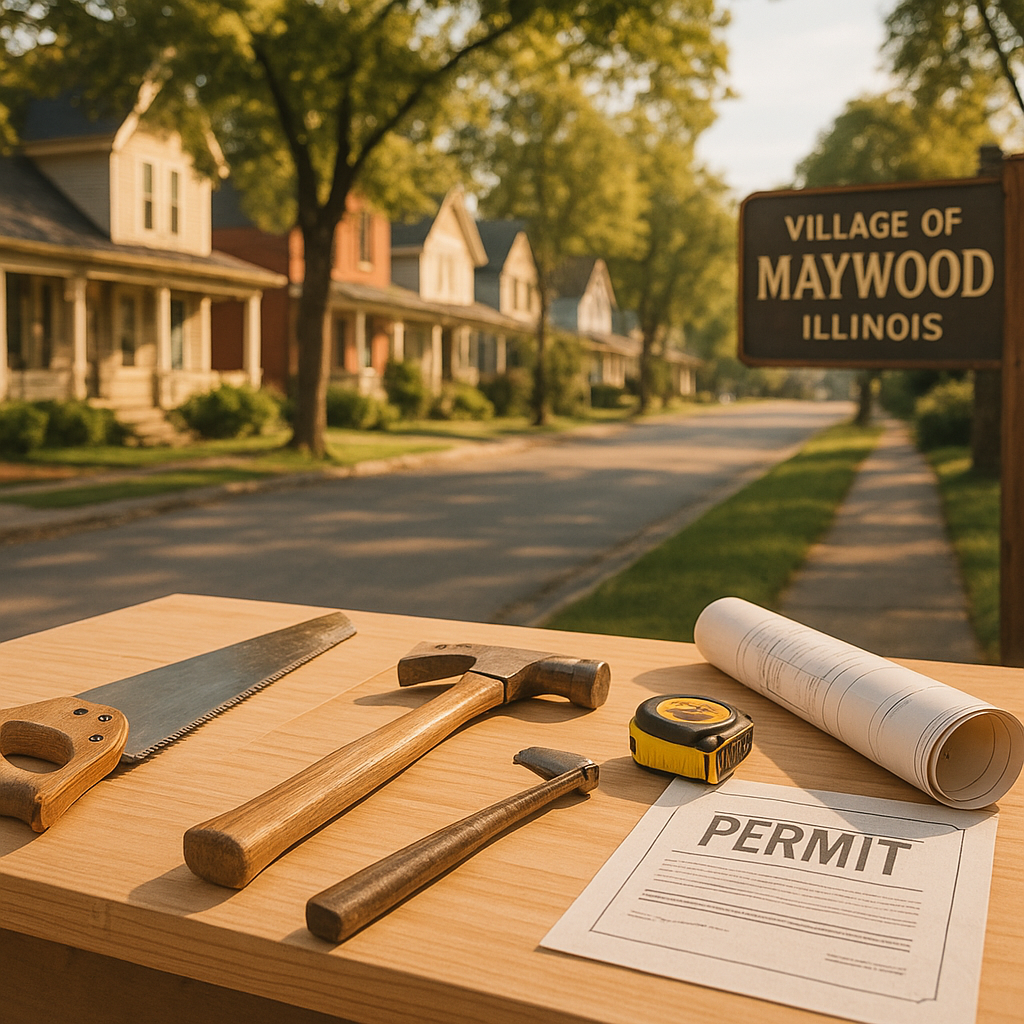
If you’re a contractor working in the Chicago area, you already know that every village has its own way of doing things. Maywood, Illinois is no different. Before you start framing a deck, finishing a basement, or taking on a custom carpentry project, you need to understand how local licenses and permits work. The last thing you want is to face a stop-work order or a fine because a piece of paper was missing.
One term you may have already come across is the Village of Maywood IL Contractor License and Permit Bond. If you’re a carpentry contractor, you might also see the phrase “Carpentry Contractor – Compliance Only.” It sounds formal, but it simply means the village wants to make sure you will follow local building codes and rules.
Why Maywood Requires Contractors to Be Licensed
Maywood, like many communities in the State of Illinois, uses licensing to protect homeowners, business owners, and the overall quality of construction in the village. When a contractor obtains a license, the village can confirm that the person or company meets basic professional standards. It also gives the village a way to track who is working within its boundaries.
Think of a contractor license as a driver’s license for your trade. It shows that you know the rules of the road, or in this case, the local building code. Without it, you are operating outside the system. That can create serious problems if something goes wrong on a job site.
Permits serve a different but related purpose. While a license says you are qualified to do the work, a permit says this specific project has been reviewed and approved. For carpentry work, this might include structural changes, framing, stair construction, or any project that affects the safety of a building.
What Is the Village of Maywood IL Contractor License and Permit Bond?
A contractor license and permit bond is a type of surety bond that some municipalities require before they will issue a license or permit. In basic terms, it is a three-party promise. The contractor promises to follow all local rules. The bond company backs that promise. The village is protected if the contractor breaks the rules.
It is important to understand what a bond is not. A bond is not insurance for your business. If a customer claims you did poor work, the bond does not pay to fix the project. Instead, a bond is more like a financial guarantee to the village that you will comply with codes, pay required fees, and operate legally.
For Maywood, the Contractor License and Permit Bond is often required as part of the application package. The exact amount can vary depending on the type of work and the contractor’s history. Many contractors find that obtaining the bond is one of the simplest parts of the licensing process.
What Does “Carpentry Contractor – Compliance Only” Mean?
If you are a carpenter, you may have seen the exact phrase “Carpentry Contractor – Compliance Only” on a bond form or village checklist. This label tells you the bond is designed to cover compliance with local laws, not the final quality or completion of a specific project.
Here is a simple way to understand it. A performance bond guarantees that you will finish the job according to the contract. A compliance bond, on the other hand, guarantees that you will follow the rules while doing the job. For a carpentry contractor in Maywood, the village is typically asking for the compliance-only bond. They want to know you will pull the right permits, follow code, and respect local building standards.
This distinction matters because it affects the cost and the claims process. Compliance bonds are usually less expensive than performance bonds. They are also easier to qualify for, which is good news for independent carpenters and small shops.
Step-by-Step Guide to Getting Licensed and Permitted in Maywood
Every contractor’s situation is a little different, but the process in Maywood generally follows the same path. Breaking it into small steps can make it feel much more manageable.
1. Contact the Village of Maywood
Start by reaching out to the building department or village clerk’s office. Ask for the current contractor licensing requirements. Rules and fee schedules can change, so you want the most up-to-date information. This step alone can save you from submitting an incomplete application.
2. Prepare Your Business Documents
You will likely need to provide basic information about your business. This may include proof of insurance, a state-issued ID, your Employer Identification Number or Social Security number, and sometimes a certificate of workers’ compensation. If you are not sure what to bring, ask the village. Better to bring too much than too little.
3. Obtain the Required Bond
If Maywood requires a Contractor License and Permit Bond, you will need to purchase it from a licensed surety company. For a Carpentry Contractor – Compliance Only bond, the process is usually fast. You fill out a short application, provide some basic business information, and pay a premium. The premium is a small percentage of the total bond amount.
4. Submit Your Application and Fee
Turn in your completed application, bond paperwork, and any required fees to the Village of Maywood. Keep a copy of everything for your records. Ask how long the review process takes and whether you need to schedule an inspection or interview.
5. Pull Permits for Each Project
Once your license is approved, remember that you may still need a permit for individual jobs. A license is not a blanket approval to build anything anywhere. Before starting a carpentry project, check with the village to see if a permit is required. If so, submit the project details and wait for approval before you begin work.
6. Keep Your License and Bond Active
Most contractor licenses and bonds expire after one year. Set a reminder on your calendar a few weeks before the expiration date. Renewing on time keeps you legal and avoids late fees. If your bond lapses, the village may suspend your license.
Cost Factors and Renewal Basics
The cost of a contractor license and permit bond in Maywood depends on a few key factors. The bond amount set by the village is the biggest factor. Your personal credit history also plays a role. Carpenters with strong credit may pay as little as one to three percent of the total bond amount. Those with lower credit scores may pay a higher premium, but most can still find an option.
Licensing fees are separate from bond costs. You may also need to budget for business insurance, permit fees, and renewals. These are normal costs of doing business, but they can add up. Planning for them upfront helps you price your projects accurately.
Common Pitfalls and How to Avoid Them
Many contractors run into trouble simply because they rush. Starting work before a permit is issued is one of the most common mistakes. It may feel productive, but it can lead to fines, project delays, and even a revoked license.
Another common problem is confusing a compliance bond with insurance. Remember, the bond protects the village’s interest in seeing you follow the rules. It does not protect you from lawsuits or property damage claims. You still need general liability insurance and other coverage appropriate for your trade.
Finally, do not assume the rules are the same as a neighboring town. What works in Chicago, Oak Park, or Melrose Park may not apply in the Village of Maywood. Always verify local requirements before you start a job.
Make Compliance Part of Your Business Plan
Navigating contractor licensing and permits in Maywood, Illinois does not have to be stressful. Once you understand the difference between a license, a permit, and a bond, the path becomes clearer. For carpentry contractors, the “Compliance Only” bond is often a straightforward requirement that simply signals your commitment to following the rules.
When you take the time to get licensed, bonded, and permitted correctly, you build trust with your clients and with the village. That trust can lead to better referrals, fewer legal headaches, and a stronger reputation. So before you pick up your tools for your next Maywood project, make sure your paperwork is in order. It is one step you will never regret taking.