If you’re a contractor in Arlington Heights, Illinois, you’ve probably heard the words “license and permit bond” more than once. Maybe you’re a homeowner planning a renovation and a contractor mentioned needing one. Either way, the idea can feel a little confusing. The good news? It’s not as complicated as it sounds. Let’s break it down in plain, everyday language so you know exactly what’s involved, why it matters, and how to move forward with confidence.
What Is a Contractor License and Permit Bond?
A contractor license and permit bond is basically a promise backed by money. It tells the Village of Arlington Heights that you, as a contractor, will follow the local rules. If you don’t, there’s a fund available to help cover fines, penalties, or damages caused by that non-compliance.
Think of it like a security deposit. When you rent an apartment, the landlord holds a deposit in case you break the lease or damage the unit. A contractor bond works in a similar way, but it’s managed through a surety company and protects the public rather than a landlord.
There are three main parties involved in any bond:
- The principal: This is the contractor who buys the bond.
- The obligee: This is the Village of Arlington Heights, which requires the bond.
- The surety: This is the company that backs the bond financially.
If the contractor violates local building codes, permit conditions, or other rules, the village can make a claim against the bond. The surety may pay out first, but the contractor is ultimately responsible for reimbursing that amount.
Why Arlington Heights Requires These Bonds
You might wonder why contractors have to go through this extra step. The answer comes down to protection. Arlington Heights wants to make sure anyone doing construction, remodeling, or demolition work operates responsibly.
When a contractor pulls a permit in Arlington Heights, the village is essentially giving them permission to work within the community. That permission comes with expectations. The bond helps ensure those expectations are met. It protects homeowners, business owners, and the village itself from contractors who might cut corners or ignore local rules.
For residents, this means a little extra peace of mind. You’re not just trusting someone’s word. There’s a financial safety net in place if something goes wrong. For contractors, it’s a sign of professionalism. Having a bond shows clients and local officials that you take compliance seriously.
Wrecking Contractor – Compliance Only Bond
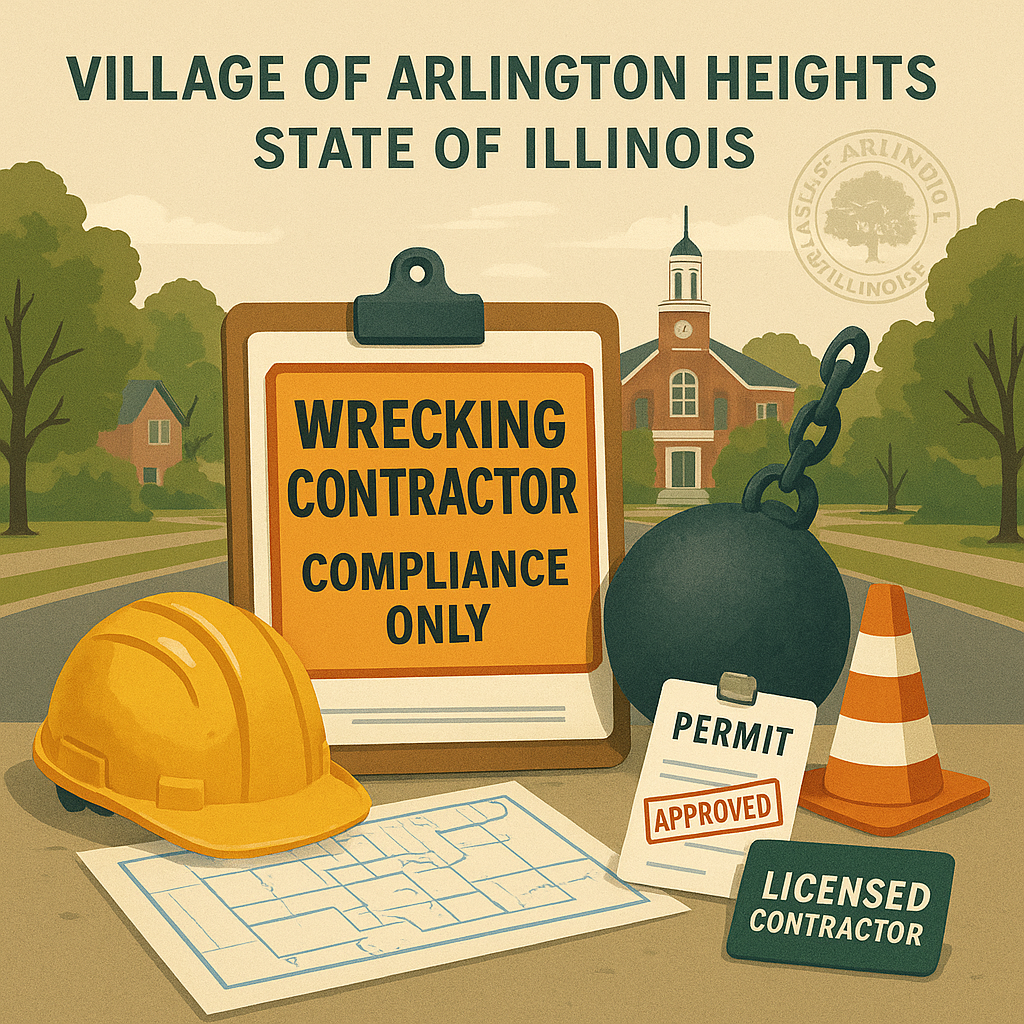
One specific type of bond you may come across in Arlington Heights is the wrecking contractor compliance only bond. This one is often required for contractors who handle demolition or wrecking work. The phrase “compliance only” is important, so let’s unpack it.
Unlike some performance bonds that guarantee a project will be completed on time and according to a contract, a compliance only bond focuses on something narrower. It guarantees that the wrecking contractor will comply with local ordinances, permit conditions, and building codes. It does not function as general liability insurance for property damage or injuries.
For example, imagine a contractor is tearing down an old garage in Arlington Heights. The village issues a permit with specific rules about dust control, debris removal, and working hours. If the contractor ignores those rules and leaves debris all over the street, the village can file a claim against the compliance only bond. The bond helps cover the cost of fixing the problem or paying any fines.
What Does “Compliance Only” Mean for Your Project?
If you’re a contractor, it means you need to read your permit carefully and follow every condition listed. The bond is not a blanket protection for every possible issue. It’s focused on your obligation to follow the village’s rules.
If you’re a property owner hiring a wrecking contractor, it’s helpful to understand that this bond backs up regulatory compliance. It doesn’t replace other types of insurance, so you may still want to ask about the contractor’s general liability coverage and worker’s compensation policy.
Think of a compliance only bond as a referee. It doesn’t play the game, but it’s there to blow the whistle if someone breaks the rules. It helps keep the project on the right side of local law.
How to Get a Contractor License and Permit Bond in Arlington Heights
If you need a contractor license and permit bond in the Village of Arlington Heights, the process is usually straightforward. Here are the basic steps:
- Check the village requirements: Confirm the exact bond type and amount you need. The requirements can vary depending on whether you’re doing general contracting, roofing, electrical work, or wrecking.
- Gather your business information: You’ll typically need your business name, address, license number if available, and details about the specific permit or project.
- Contact a surety bond provider: Many companies specialize in contractor license and permit bonds. You can request a quote online or by phone.
- Pay the bond premium: You’ll usually pay a small percentage of the total bond amount. The exact premium can depend on your credit history and business experience.
- File the bond with the village: Once you have the bond, you’ll submit it to Arlington Heights along with your license or permit application.
The good news is that many contractor bonds are approved quickly. Some can even be issued the same day. If your paperwork is in order, this part of the process shouldn’t slow you down.
Common Questions Contractors Ask
Let’s look at a few questions that come up often when dealing with contractor bonds in Arlington Heights.
How much does a contractor license and permit bond cost?
The cost depends on the bond amount and your personal credit. If the village requires a $10,000 bond, you might pay anywhere from $100 to $500 for the premium. Contractors with strong credit usually pay less. Even if your credit isn’t perfect, there are often programs available to help.
Is a bond the same as insurance?
No. Insurance protects the contractor’s business from unexpected losses. A bond protects the public and the village from a contractor’s failure to comply with the rules. If a claim is paid on a bond, the contractor must reimburse the surety company. That’s a big difference.
How long does the bond stay in effect?
Most license and permit bonds stay active as long as the contractor’s license or permit is valid. Some bonds may be continuous until canceled, while others have a specific term. It’s important to keep your bond current. If it lapses, you could lose your ability to work legally in Arlington Heights.
What happens if a claim is filed?
If a claim is filed, the surety company will investigate. If the claim is valid, the surety may pay up to the bond amount. After that, the contractor is expected to repay the surety. It’s serious business, so it’s always better to resolve compliance issues before they turn into claims.
Tips for Staying Compliant in Arlington Heights
Staying compliant doesn’t have to be stressful. A few simple habits can keep your bond claim-free and your reputation strong.
- Read every permit carefully. The conditions are there for a reason. If something isn’t clear, ask the village for clarification.
- Keep your license and bond active. Don’t let renewal deadlines slip by. Set reminders well in advance.
- Document your work. Photos, emails, and inspection reports can help you prove compliance if a question ever comes up.
- Communicate with local officials. If you run into an unexpected issue, reach out to the Village of Arlington Heights early. It’s much easier to address a small concern than to defend against a claim later.
For homeowners, asking a contractor about their bond status is a smart move. A reputable contractor will be happy to provide proof of bonding and explain what it covers. If someone hesitates or says it doesn’t matter, that could be a red flag.
Wrapping It Up
Navigating contractor licenses and permits in Arlington Heights Illinois doesn’t have to be overwhelming. Whether you’re a general contractor, a wrecking contractor, or a homeowner planning a project, understanding the role of a license and permit bond helps everyone feel more secure.
These bonds are not just paperwork. They’re a practical way to hold contractors accountable and keep the community safe. For wrecking contractors, the compliance only bond is a focused promise to follow local rules. For the village, it’s another layer of protection for residents and property.
If you’re preparing for a project in Arlington Heights, take a little time to confirm the bond requirements. It’s one of those small steps that can prevent big headaches down the road. And when everyone plays by the rules, the whole community benefits.