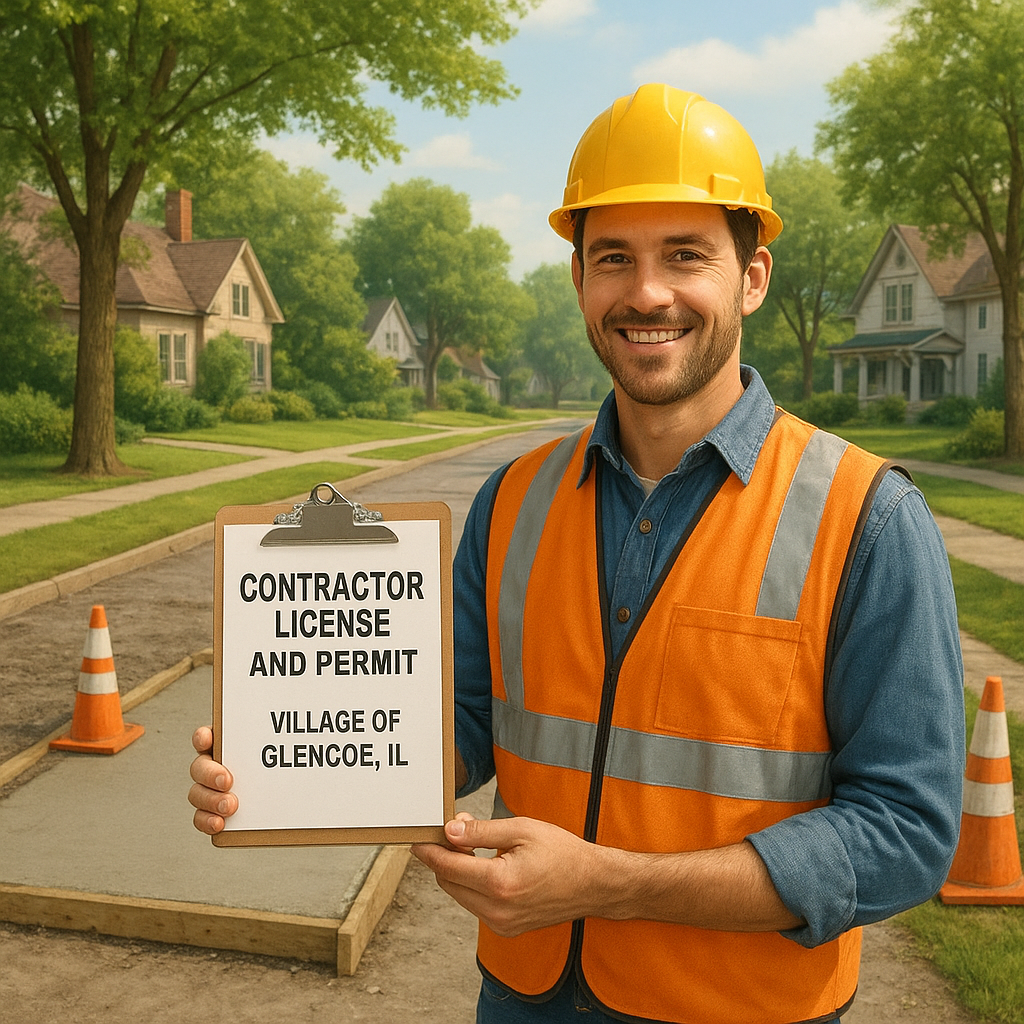
So you’re ready to pour concrete in Glencoe, Illinois. Whether you’re planning a new driveway, a patio, a foundation, or a commercial slab, one thing is certain: the Village of Glencoe wants to make sure the work is done safely and according to local rules. That’s why concrete contractors must understand the licensing and bonding process before they start a job.
If the phrase “Village of Glencoe IL Contractor License and Permit Bond” feels overwhelming, don’t worry. This guide breaks everything into simple, bite-sized steps. You’ll learn what a concrete contractor license is, why a compliance bond matters, and how to get everything in place without pulling your hair out.
Why Glencoe Requires a Concrete Contractor License
Glencoe is a village that takes building safety seriously. Like many communities in Illinois, it uses contractor licenses and permits to keep construction projects on track. A license shows that you are a legitimate business and that you agree to follow local codes. A permit gives you permission to do a specific job at a specific address.
For concrete work, this is especially important. Concrete may look simple once it’s poured, but a lot can go wrong underneath the surface. Improper grading, weak mix, missing reinforcement, and drainage problems can lead to costly repairs later. The Village of Glencoe wants to protect homeowners and businesses from those headaches.
Think of the license as your professional handshake with the village. It says, “I know the rules, and I plan to follow them.”
The Role of the Contractor License and Permit Bond
Now let’s talk about the bond. A contractor license and permit bond is not the same as insurance. It’s a three-party promise that protects the public. The three parties are:
- The principal: You, the concrete contractor.
- The obligee: The Village of Glencoe, which requires the bond.
- The surety: The company that issues the bond and backs your promise.
When you buy a bond, you’re promising to follow Glencoe’s building codes, permit rules, and other local regulations. If you break that promise and cause financial harm, a claim can be made against the bond. The surety may pay the claim, but you are ultimately responsible for paying the surety back.
For many concrete contractors in Glencoe, the bond category is listed as “Concrete Contractor – Compliance Only.” That simply means the bond exists to ensure compliance with local laws. It’s not a performance bond that guarantees the finished project. It’s a compliance bond that guarantees you’ll do your work according to the village’s standards.
Step-by-Step Guide to Getting Licensed
Every contractor’s path looks a little different, but the overall process in Glencoe follows a familiar rhythm. Here are the main steps you’ll likely need to take.
1. Register Your Business
Before applying for a contractor license, make sure your business is set up properly with the State of Illinois. This usually means registering with the Illinois Secretary of State if you operate as an LLC or corporation. Sole proprietors may not need state registration, but you should still have a clear business name and tax information ready.
Glencoe will want to know exactly who is applying for the license. Having your business registration documents in order makes the rest of the process much smoother.
2. Contact the Village of Glencoe Building Division
Rules can change, and specific requirements may vary depending on the type of concrete work you do. The best move is to contact the Village of Glencoe’s Building Division or Community Development Department directly. Ask them about the current application for a concrete contractor license.
This step saves time because you’ll get the exact forms, fee amounts, and bond requirements from the source. It’s a quick call or email that can prevent hours of guesswork.
3. Prepare Your Insurance Documents
Most contractor licenses require proof of general liability insurance. The village wants to know that if something goes wrong on a job site, there’s coverage to handle property damage or injuries. A typical certificate of insurance lists the Village of Glencoe as a certificate holder or additional insured.
Before you submit your application, review your insurance policy. Make sure your coverage limits meet or exceed what the village asks for. If you’re not sure, your insurance agent can help you adjust the policy.
4. Purchase the Contractor License and Permit Bond
Once you know the bond amount required by Glencoe, you can shop for a bond. The bond amount is the maximum penalty that can be claimed against the bond, not the price you pay upfront. For example, if the village requires a $10,000 compliance bond, you won’t pay $10,000. You’ll pay a small premium, often between 1% and 5% of that amount, depending on your credit and business history.
When you purchase the bond, the surety company will issue a bond certificate. You’ll submit this certificate with your application. Look for a bond company that understands Illinois contractor bonds and can clearly label the bond as “Concrete Contractor – Compliance Only” or the exact category Glencoe requires.
5. Complete the Application and Pay Fees
With your business registration, insurance, and bond ready, you can fill out the license application. Double-check every field. A missing signature or an outdated insurance certificate can slow down the process.
Glencoe will likely charge a license or registration fee. The fee amount varies, so confirm it with the village. Once you submit everything, you may need to wait a few business days for processing.
6. Keep Everything Up to Date
Getting licensed is not a one-time event. Your license and bond will have expiration dates. Mark them on your calendar and renew before deadlines. Letting your bond lapse could automatically invalidate your license, even if you have active jobs in Glencoe.
How Much Does the Bond Cost?
The cost of a contractor license and permit bond depends on a few factors. The bond amount set by the village is the biggest one. Your personal credit score and business financial history also play a role. Contractors with strong credit often pay lower premiums, while those with challenged credit may pay more.
For a compliance-only concrete contractor bond, premiums are usually affordable. Many contractors are surprised to learn they can secure a bond for a few hundred dollars or less, depending on the amount and their qualifications. The key is to compare quotes from different bond providers.
Compliance Only: What Does That Mean for You?
The term “Compliance Only” can be confusing. Let’s break it down with a simple analogy. Imagine a neighborhood with a rule that all fences must be six feet tall. A compliance bond doesn’t promise your fence will look beautiful. It promises you’ll follow the six-foot rule.
For concrete contractors, this means you’ll follow Glencoe’s building codes, obtain the right permits, and complete the work in line with local regulations. It does not mean the village will cover the cost of redesigning a driveway you don’t like. That’s a separate issue between you and the client.
This distinction matters because it sets clear expectations. The bond protects the village and property owners from code violations, not from ordinary business disagreements.
Common Mistakes to Avoid
Even experienced contractors make mistakes during the licensing process. Here are a few to watch out for:
- Assuming every village has the same rules. Glencoe may have different bond amounts or insurance limits than neighboring towns. Always verify local requirements.
- Buying the wrong bond type. Make sure the bond says “Compliance” if that’s what Glencoe requires. A performance bond may not satisfy the village.
- Forgetting to renew. A lapsed bond can stop your project in its tracks. Set reminders well before expiration.
- Skipping the permit. A license allows you to work, but each job may still need its own permit. Pull permits before starting any concrete work.
- Ignoring local code updates. Building codes change over time. Stay informed so your work remains compliant.
Frequently Asked Questions
Do I need a separate license for concrete work in Glencoe?
Yes, if you are performing concrete work as a contractor, Glencoe generally requires a contractor license and possibly a permit for the specific project. Check with the village for the exact category.
Is a contractor license and permit bond the same as insurance?
No. Insurance protects you from losses. A bond protects the public and the village if you fail to follow the rules. You may need both.
Can I get bonded with less-than-perfect credit?
In many cases, yes. The premium may be higher, but bond companies often have programs for different credit profiles.
How long does it take to get licensed in Glencoe?
It depends on how quickly you gather your documents and how busy the village office is. Once you have your bond and insurance ready, the application review may take a few business days.
Ready to Start Your Concrete Project in Glencoe?
Getting a concrete contractor license in Glencoe doesn’t have to be a maze of paperwork. Break it into simple steps, gather your bond and insurance, and keep the village’s rules front and center. That way, you can focus on what you do best: laying smooth, strong concrete that stands the test of time.
Remember, the Village of Glencoe IL contractor license and permit bond is more than a box to check. It’s a sign that you’re a professional who takes local standards seriously. And that’s a reputation worth building.