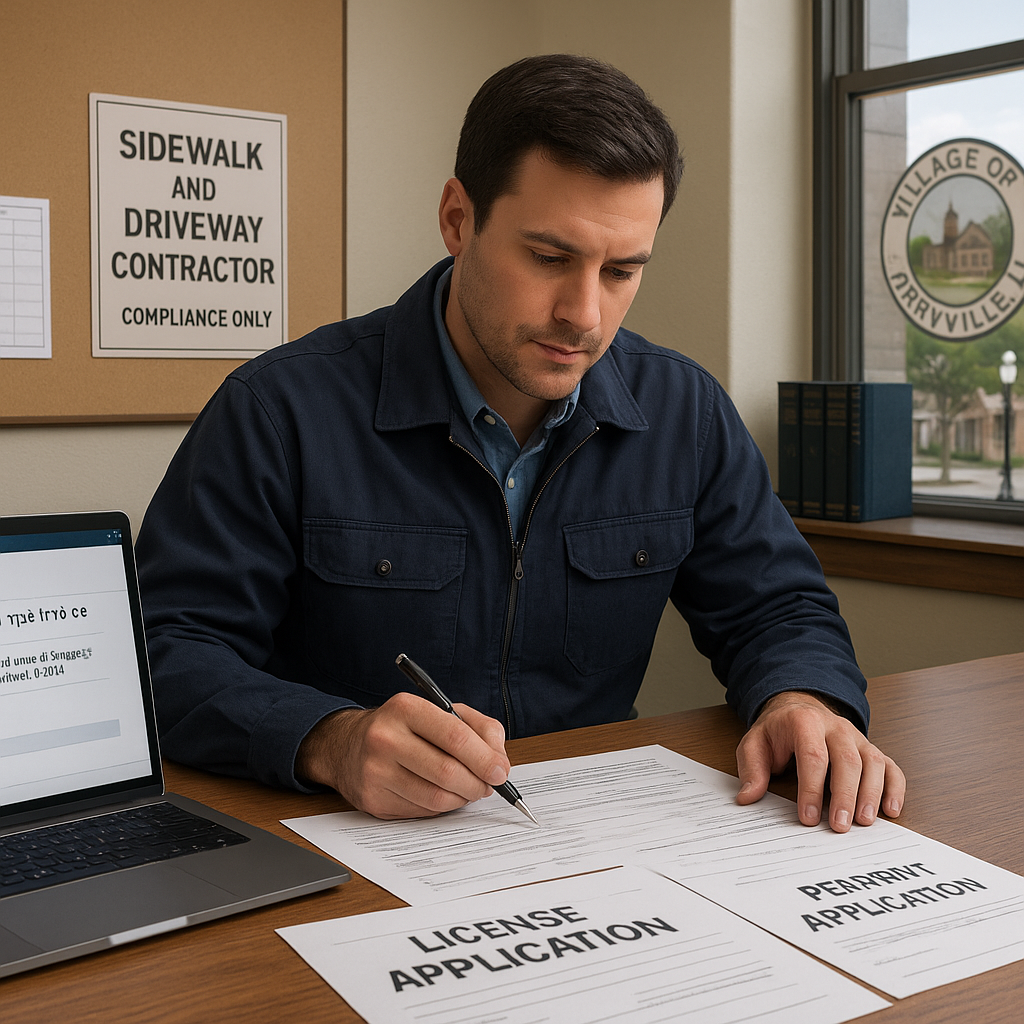
If you’re planning to install a new driveway, replace a cracked sidewalk, or take on concrete work in Maryville, Illinois, you’ve probably heard the words “license” and “permit bond” tossed around. Maybe you’re a contractor trying to get compliant, or a homeowner wanting to know what to ask before hiring someone. Either way, understanding how contractor licensing and permits work in the Village of Maryville can save you time, money, and a whole lot of stress.
This guide breaks down the essentials in plain language. No confusing legal jargon — just the facts you need to move forward with confidence.
Understanding Contractor Licensing in Maryville, Illinois
The Village of Maryville, like many Illinois communities, wants to make sure that anyone doing sidewalk or driveway work follows local rules. That’s where contractor licensing and permit bonds come in. If you’re a contractor, this isn’t just paperwork. It’s your ticket to legally working inside the village limits.
For homeowners, knowing whether your contractor is properly licensed and bonded is one of the smartest questions you can ask before signing a contract. A contractor who has done the legwork to meet Maryville’s requirements is often more prepared, more professional, and more familiar with local building codes.
What Is a Contractor License and Permit Bond?
At its simplest, a contractor license and permit bond is a three-party agreement. The contractor buys the bond, the Village of Maryville requires it, and the bonding company backs it. If the contractor breaks the local rules — maybe working without the right permit or failing an inspection — a claim can be filed against the bond.
For sidewalk and driveway contractors in Maryville, this is often called a compliance-only bond. That name tells you exactly what it covers: compliance with village codes and permit requirements. It’s not a warranty on the concrete. It’s not general liability insurance. It’s a targeted guarantee that the contractor will play by the rules while working in the village.
Think of it like a security deposit with the village. It’s not insurance for your driveway, but a promise that the contractor will follow the local rulebook.
Maryville’s Requirements for Sidewalk and Driveway Contractors
Before starting a sidewalk, driveway, or curb project in Maryville, contractors typically need to handle a few important steps. The exact details can change, so it’s always wise to contact the Village of Maryville directly. Still, the general picture usually looks like this:
- Register with the Village of Maryville and provide proof of a valid contractor license or meet local registration rules.
- Obtain a permit before starting sidewalk, driveway, or curb work.
- Secure a contractor license and permit bond in the amount set by the village.
- Follow all building codes, safety rules, and inspection requirements.
For many contractors, the key requirement is the Sidewalk and Driveway Contractor – Compliance Only bond. It shows the village that you’re serious about doing the job the right way.
What Does “Compliance Only” Really Mean?
The phrase “compliance only” can confuse people at first. It simply means the bond responds when a contractor fails to comply with local ordinances, permit conditions, or other village rules. It does not cover poor workmanship, project delays, or property damage. For those risks, a contractor still needs proper liability insurance or a separate performance bond.
Here’s a quick comparison. If a contractor pours a driveway that cracks six months later, the compliance-only bond usually won’t help. But if the contractor ignores a stop-work order or starts work without a permit, the bond could be used to address that violation.
Why Does Maryville Ask for a Compliance-Only Bond?
Think of it as a referee at a soccer game. The village sets the rules, and the bond gives those rules some teeth. When a contractor takes out a permit, the village expects certain things to happen in a certain order. The bond helps ensure that.
If the contractor starts digging before the permit is approved, or ignores a required inspection, the village can make a claim. That protects the community’s streets, sidewalks, drainage, and public safety. It also keeps the playing field fair for contractors who do follow the rules.
Homeowners benefit too. A bonded contractor has jumped through extra hoops to prove they’re serious about following local rules. That doesn’t guarantee a perfect project, but it does reduce the chance of avoidable problems.
How to Get Licensed and Bonded in Maryville, Illinois
Every contractor’s journey starts with a phone call or a visit to the Village of Maryville building department. The process is usually straightforward, but details matter. Here’s a step-by-step path to get on the right track:
- Contact the Village of Maryville building department or public works office to confirm current requirements.
- Complete any contractor registration or license application the village requires.
- Determine the required bond amount for sidewalk and driveway work.
- Get a quote from a surety bond provider. Compliance-only bonds are usually inexpensive.
- File the bond with the village and keep a copy for your records.
- Apply for permits separately for each project before starting work.
Let’s say you’re a concrete contractor based in nearby Collinsville. You land a driveway replacement job in Maryville. Before you can pour a single yard of concrete, you’ll need to satisfy Maryville’s local requirements. You call the village, learn the bond amount, buy the bond for a small premium, and submit the paperwork. Once your permit is issued, you’re ready to work.
What Does a Compliance-Only Bond Cost?
The cost depends on the bond amount and your credit history. Many compliance-only bonds for contractors start at around $100 a year. For a $5,000 or $10,000 bond, you might pay only 1% to 5% of that amount. So a $5,000 bond could cost as little as $50 to $250. That’s a small price for being able to legally work in Maryville.
Keep in mind that the bond amount is not the cost. It’s the maximum amount the village can claim. You only pay the premium. If the bond amount is $10,000, you don’t pay $10,000 upfront. You pay a premium, similar to how you pay car insurance. The $10,000 is the coverage limit.
Common Questions Contractors and Homeowners Ask
Do I need a bond for every single job?
Usually, the bond is an annual requirement for contractors who want to work in Maryville. Once you have it in place, you may not need a new bond for every project. However, you still need a permit for each individual sidewalk or driveway job. Always confirm with the village before starting new work.
What happens if a claim is filed against my bond?
If the village files a claim, the bonding company will investigate. If the claim is valid, the bonding company may pay the village up to the bond amount. After that, the contractor is expected to repay the bonding company. A claim can also make it harder or more expensive to get bonded in the future, so it’s best to avoid one altogether.
Does this replace liability insurance?
No. A contractor license and permit bond is not a substitute for general liability insurance. The bond protects the village’s interests, while liability insurance protects the contractor and the homeowner from property damage or injuries. Most serious contractors carry both.
Why This Matters for Your Next Project
Whether you’re a contractor looking to expand your work into Maryville or a homeowner planning a driveway replacement, starting with the right paperwork makes everything smoother. For contractors, being properly licensed and bonded opens the door to more jobs and builds trust with customers. For homeowners, hiring a bonded contractor means fewer surprises and greater peace of mind.
Nobody enjoys dealing with permits and bonds, but they serve an important purpose. They keep projects safe, legal, and accountable. The next time you’re planning sidewalk or driveway work in the Village of Maryville, take a few minutes to understand the local requirements. A little preparation goes a long way.
If you’re unsure where to begin, contact the Village of Maryville or a surety bond professional for guidance. The process is often faster and easier than you think.