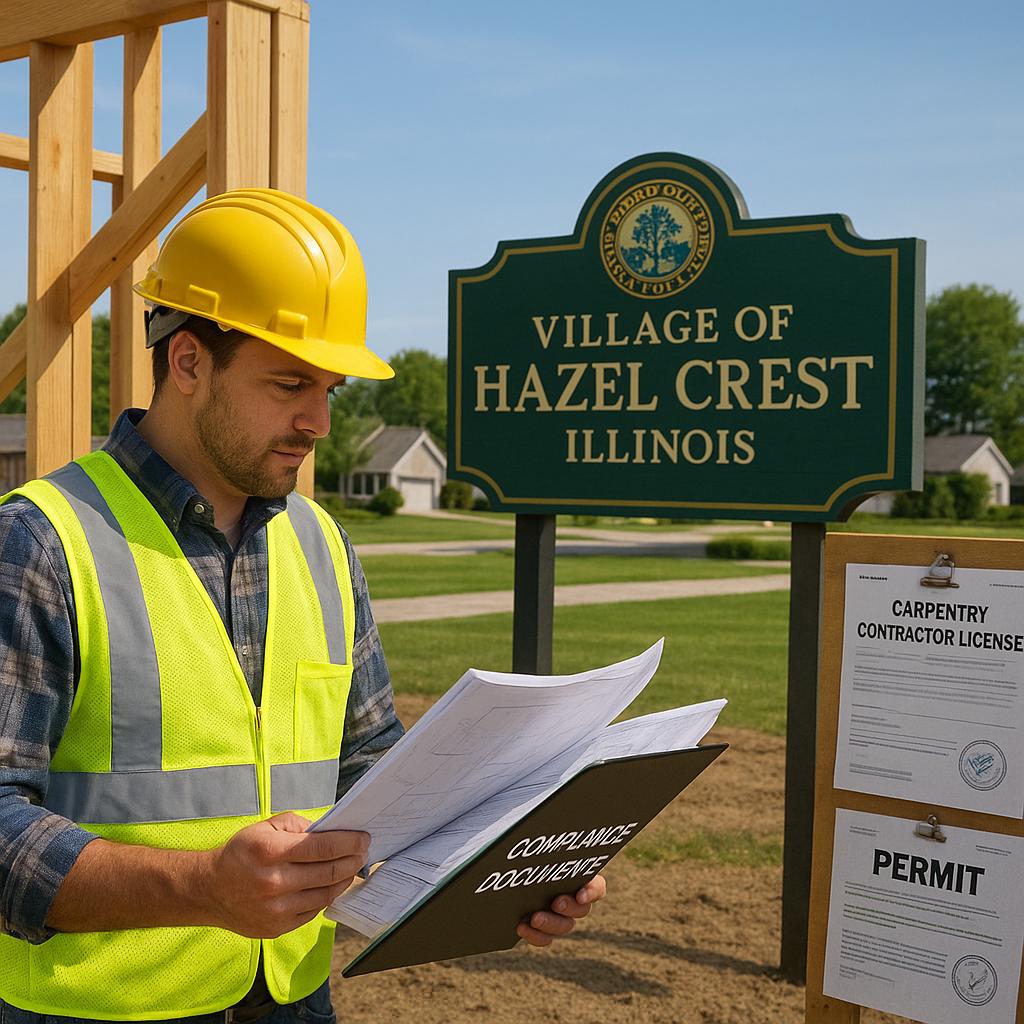
If you’re a carpenter or general contractor planning to work in Hazel Crest, Illinois, the local rules can feel a little overwhelming at first. You may have seen terms like “contractor license and permit bond” or “compliance only” and wondered what they mean for your next project. The good news is that once you break things down, the process is easier than it looks.
This guide will walk you through the basics of contractor licensing, permits, and bonding in the Village of Hazel Crest. Whether you’re framing a new deck, remodeling a kitchen, or tackling a custom carpentry job, understanding these requirements can save you time, money, and stress.
Why Hazel Crest Requires Contractor Licensing and Permits
The Village of Hazel Crest, Illinois, like many communities, uses licensing and permit rules to protect homeowners, businesses, and the community as a whole. By requiring contractors to be licensed, the village can confirm that the people doing the work have met certain standards. Permits, on the other hand, allow local building officials to review work before, during, and after construction.
Think of it this way: a license is about who is allowed to work. A permit is about what work is allowed on a specific property. Both systems work together to keep construction safe and up to code.
For carpentry contractors, this often means carrying a compliance-only bond along with a license. The bond is not just a formality. It gives the village and property owners an extra layer of protection if a contractor fails to follow local rules.
The Difference Between a Contractor License and a Permit
It is common to confuse a contractor license with a building permit, but they serve two different purposes.
- Contractor license: This is issued to the contractor or business. It gives you permission to operate within Hazel Crest and shows that you have met local requirements.
- Building permit: This is issued for a specific project. It allows certain work to be done at a specific address and often requires inspections.
An easy analogy is a driver’s license versus a parking permit. Your driver’s license shows you are allowed to drive. A parking permit gives you permission to park in a particular place. Similarly, your contractor license allows you to work in the village, while a building permit allows a specific job to proceed.
What Is a Contractor License and Permit Bond?
A contractor license and permit bond is a type of surety bond required by many local governments. When you purchase this bond, you are making a financial promise to follow the village’s codes, laws, and regulations.
If you break that promise, a claim can be made against the bond. The surety company may pay the claim, but you are generally responsible for repaying that amount. In other words, the bond is not insurance for your business. It is more like a guarantee to the Village of Hazel Crest that you will play by the rules.
Carpentry Contractor – Compliance Only: What Does That Mean?
In Hazel Crest, a carpentry contractor may be required to obtain a compliance-only bond. This phrase can confuse people, but it simply means the bond focuses on compliance with local rules, not on the quality of your craftsmanship.
For example, if you build a deck without the proper permit or ignore a stop-work order, the compliance bond could come into play. If a homeowner is unhappy with the stain color or wants a refund because they changed their mind about trim, that is generally not covered by a compliance bond.
So, a compliance-only bond is about following the rules set by the Village of Hazel Crest. It gives the local government confidence that you will complete your work in accordance with the law.
Step-by-Step Guide to Getting Licensed and Bonded in Hazel Crest
Each contractor’s path may look a little different, but most people follow a similar process. Here is a simple checklist to help you get started.
- Contact the Village of Hazel Crest building department: Ask about current contractor license requirements. Rules can change, so it is always smart to get the latest information directly from the source.
- Gather your business documents: You may need proof of business registration, a certificate of insurance, and basic identification.
- Determine the bond amount and type: Ask whether you need a compliance-only bond and how much coverage is required for your trade.
- Purchase your contractor license and permit bond: Work with a surety bond provider that understands Illinois contractor bonds. The cost is usually a small percentage of the total bond amount.
- Submit your application and pay fees: Turn in everything together to avoid delays. Some contractors miss deadlines because they forget one small document.
- Wait for approval: Once approved, keep copies of your license and bond certificate on file. You may need to show them when applying for building permits.
This may feel like a lot of steps, but taking it one piece at a time makes it manageable. Many contractors find that the biggest hurdle is simply knowing where to start.
Common Mistakes Contractors Make in Hazel Crest
Avoiding common mistakes can help you keep your projects moving and protect your reputation. Here are a few things to watch out for.
- Skipping the permit: Even small structural carpentry jobs may need a permit. If you are unsure, ask before you start cutting lumber.
- Choosing the wrong bond type: A general liability policy is not the same as a contractor license and permit bond. Make sure you know which one the village requires.
- Letting your license or bond expire: Expired paperwork can stop a project in its tracks. Set reminders well before your renewal date.
- Assuming rules are the same everywhere: Hazel Crest may have different requirements than nearby towns. What worked in another village may not work here.
By staying organized and asking questions early, you can avoid many of these headaches. Local building officials are often happy to help if you reach out before starting work.
When Do You Need a Permit for Carpentry Work?
Not every small repair needs a permit, but many carpentry projects do. In general, work that changes the structure of a building or affects safety will need approval.
Common carpentry projects that may require a permit include:
- Framing new walls or removing existing walls
- Building or replacing a deck or porch
- Installing roof trusses or structural beams
- Finishing a basement or attic space
- Adding stairs or altering load-bearing elements
If you are only doing cosmetic work, like installing trim, replacing cabinet doors, or repairing a piece of siding, you may not need a permit. Still, it is always best to check with the Village of Hazel Crest. A quick phone call can prevent a costly stop-work order later.
How a Bond Protects Homeowners and Contractors
A contractor license and permit bond may sound like it only protects the local government, but it can also help contractors build trust with clients. When a homeowner sees that you are licensed and bonded, they know you take your business seriously.
For homeowners, the bond offers a financial safety net. If a contractor violates a local building code or fails to comply with a permit requirement, the homeowner may have a path to file a claim. This does not replace due diligence, but it does add peace of mind.
For contractors, being bonded can set you apart from competitors who may not be fully compliant. It signals professionalism and reliability. Many savvy homeowners in Hazel Crest prefer to hire contractors who have all their paperwork in order.
Final Thoughts on Navigating Contractor Licensing and Permits in Hazel Crest
The Village of Hazel Crest, Illinois, has rules in place to keep construction work safe, fair, and accountable. For carpentry contractors, understanding the need for a contractor license, project permits, and a compliance-only bond is a key part of running a successful business.
Start by contacting the local building department, ask about your specific trade, and gather the right documents. Once you understand the basics, the process becomes much less intimidating. A little preparation now can help you avoid delays, fines, and frustration down the road.
Whether you are an experienced contractor or just getting started, staying informed about local requirements is always a smart move. In Hazel Crest, being properly licensed and bonded is not just about compliance—it is also a way to show your clients that you are committed to doing the job right.