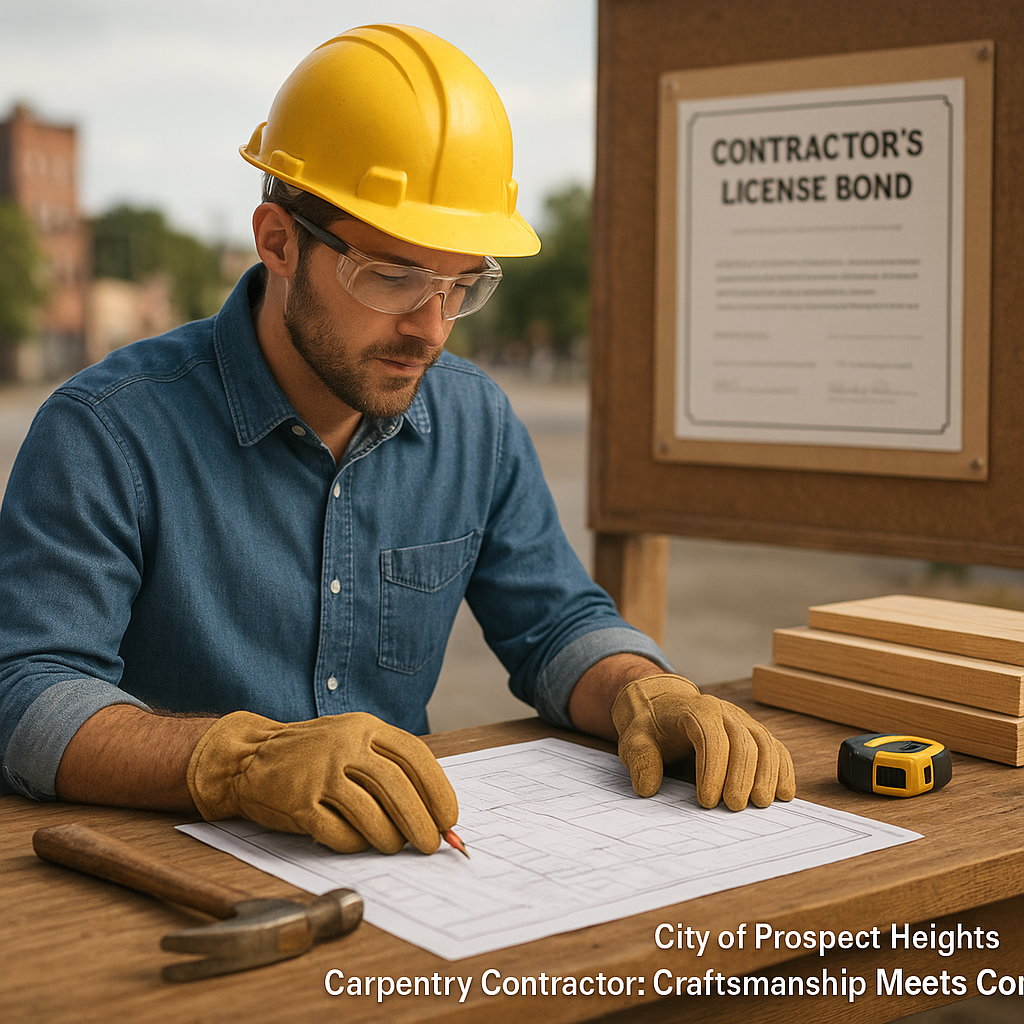
If you’re a carpenter or general contractor working in Prospect Heights, Illinois, you’ve probably heard the term “contractor license bond” mentioned more than once. It can sound like just another piece of red tape, but it’s actually an important part of running a compliant business. In this post, we’re going to break down what a contractor license bond is, why the City of Prospect Heights asks for one, how it protects the community, and what you can expect to pay. Whether you’re applying for the first time or getting ready to renew, this guide will help you understand the process without all the confusing jargon.
What Exactly Is a Contractor License Bond?
A contractor license bond is a three-party agreement that gives the city a financial guarantee. It says that you, as a contractor, will follow the local rules and regulations tied to your license. If you don’t, the bond can step in to cover certain costs or penalties.
Think of it like a security deposit for your contractor’s license. You don’t necessarily lose that money if you do things right. But if you break the rules, the city can use it to make things whole. The bond isn’t there to punish you for no reason. It’s there to make sure everyone plays by the same book.
The Three Main Players in a Bond
Every contractor license bond has three parties:
- The Obligee: This is the City of Prospect Heights, IL. They require the bond and are protected by it.
- The Principal: This is you, the contractor who buys the bond.
- The Surety: This is the company that backs the bond and pays out if a valid claim is made.
In simple terms, the city wants a promise from you. The surety company guarantees that promise with money. If you keep your promise, nothing happens. If you don’t, the surety may pay the city, and then you’ll need to repay the surety.
Why Prospect Heights, IL Requires a Compliance-Only Bond
The City of Prospect Heights wants to protect homeowners, business owners, and the community as a whole. When a contractor pulls a permit or operates with a city license, the city needs a way to enforce local building codes and safety standards. That’s where the contractor license bond comes in.
For carpentry contractors, the bond is often described as a “compliance-only” bond. That means its main job is to ensure you comply with city ordinances, permit requirements, and building regulations. It isn’t designed as a direct warranty for a homeowner’s satisfaction. Instead, it keeps the contractor accountable to the city itself.
Imagine a carpenter frames a new deck but ignores a local code about railing height. The city could issue a correction notice. If the carpenter doesn’t fix the issue, the city may file a claim against the bond to cover fines or the cost of bringing the project into compliance. The bond gives the city leverage to get things corrected without dipping into public funds.
How a Compliance-Only Contractor Bond Works in Real Life
Let’s paint a clearer picture. Suppose you’re a carpentry contractor in Prospect Heights, IL. You buy a contractor license bond because the city requires it before you can get or renew your license. You start a job, pull the proper permit, and agree to follow all local codes.
Now, let’s say something goes wrong. Maybe you miss an inspection or don’t finish a required safety fix. The city reaches out and gives you time to correct the problem. If you handle it, no claim is made. But if you ignore the notice or refuse to fix the violation, the city can file a claim against your bond.
At that point, the surety company investigates. If the claim is valid, the surety pays the city up to the bond amount. You are then responsible for paying the surety back. This is why a bond isn’t like insurance for your business. It’s more like a line of credit with a specific purpose.
Contractor License Bond vs. Contractor Insurance
It’s easy to mix up bonds and insurance, but they serve very different purposes. Insurance generally protects your own business from things like property damage, injuries, or lawsuits. A bond, on the other hand, protects the city and the public from a contractor who fails to follow the rules.
Here’s a quick way to remember the difference:
- Insurance: Protects you and your business from unexpected losses.
- Bond: Protects the City of Prospect Heights and the community if you fail to comply with licensing rules.
For a homeowner, this means a bond doesn’t automatically pay out just because you’re unhappy with the quality of the work. You may still need to work through the city, file a complaint, or pursue other legal options. The bond is a compliance tool first, not a substitute for a workmanship guarantee.
How Much Does a Contractor License Bond Cost?
The cost of a contractor license bond in Prospect Heights, IL depends on the bond amount required by the city and your personal credit history. You won’t typically pay the full bond amount. Instead, you pay a small percentage called the premium.
For example, if the city requires a $10,000 bond, you might only pay $100 to $300 per year for it. Contractors with good credit often get the best rates. If your credit is rough, you may still be able to get bonded, but the premium could be higher.
Because bond amounts vary by trade and city requirements, it’s smart to check with the City of Prospect Heights or a licensed surety provider to find out the exact amount you need. Once you know that number, getting a quote is usually fast and free.
How to Get a Prospect Heights Contractor License Bond
The process of getting bonded doesn’t have to be complicated. Here are the basic steps:
- Check city requirements: Contact the City of Prospect Heights or visit their licensing page to see the bond amount and type you need.
- Apply with a surety provider: You’ll fill out a short application with your business and personal information.
- Get a quote: The surety will review your credit and give you a premium rate.
- Pay the premium: Once you accept the quote, you’ll pay the premium to activate the bond.
- File the bond with the city: You’ll receive a bond form to submit to the City of Prospect Heights as part of your license application or renewal.
Keep a copy of your bond on file and set a reminder for renewal. Most contractor license bonds need to stay active for as long as you hold your city license. If the bond lapses, the city could suspend or revoke your license.
Common Questions About Contractor Bonds in Prospect Heights, IL
Is a Contractor License Bond the Same as Being Licensed?
No. A bond is one part of the licensing process. You still need to meet all other city requirements, such as paying fees, showing proof of insurance, and passing any required applications or inspections.
Who Can File a Claim Against the Bond?
In most cases, the City of Prospect Heights is the party that can file a claim. Homeowners and project owners can report violations to the city, but they usually don’t file directly against the bond unless the bond language allows it.
How Long Does a Bond Last?
Most contractor license bonds run for one year and need to be renewed annually. You’ll want to keep your bond active for as long as your license is valid. If your bond expires, your license could become inactive.
Final Thoughts on Compliance for Prospect Heights Contractors
A contractor license bond in Prospect Heights, IL isn’t just a piece of paper. It’s the city’s way of making sure contractors do their jobs lawfully and maintain the trust of the community. For carpentry contractors, a compliance-only bond offers a clear path to meeting local rules without creating unnecessary confusion.
If you’re ready to work in Prospect Heights, take the time to understand your bond requirements. A little preparation now can save you from delays, fines, and licensing headaches later. And remember, the bond is there to protect everyone—including honest contractors who want to build a strong reputation.