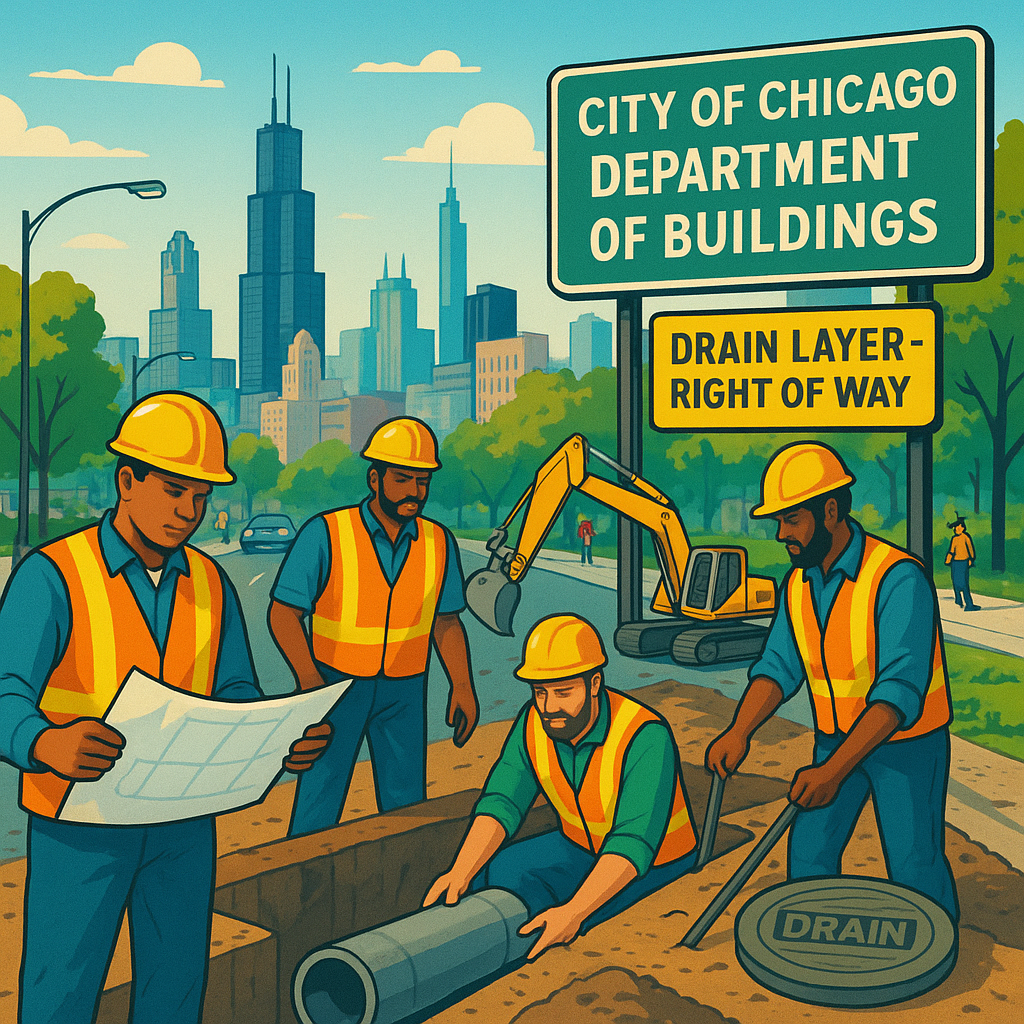
If you’ve ever walked past a construction site in Chicago and noticed workers laying pipes or repairing drainage near the street, you’ve probably seen a drainlayer in action. But what you might not see is the paperwork, bonding, and city oversight happening behind the scenes. The City of Chicago takes drainlayer work seriously, especially when it happens in the public right of way.
Understanding how the Drainlayer Department of Buildings bond works, what right-of-way rules apply, and how to handle permits can save contractors, property owners, and even curious residents a lot of headaches. Whether you’re a seasoned professional or just starting to explore this field, this guide breaks it all down in plain, everyday language.
What Does a Drainlayer Do in Chicago?
A drainlayer is a licensed professional who installs, repairs, or replaces drainage systems. This can include sewer pipes, storm drains, catch basins, and other underground systems that move water away from homes, businesses, and streets. In a dense urban environment like Chicago, proper drainage isn’t just a convenience—it’s a matter of public health and safety.
Think of a drainlayer as the person who helps make sure rainwater and wastewater have a safe, reliable path away from where people live and work. Without proper drainage, basements flood, streets become waterlogged, and sewer systems can back up. That’s why the city doesn’t let just anyone dig up a street or sidewalk and start working on pipes.
The Role of the Chicago Department of Buildings
The City of Chicago Department of Buildings is the main agency responsible for regulating drainlayers and related construction trades. If you want to work as a drainlayer in Chicago, you need to meet certain licensing requirements. These rules are designed to protect both the workers and the public.
The department oversees licensing, bonds, insurance requirements, and permit issuance for work that takes place in the city. For drainlayers, especially those working in public spaces, the department wants to see proof that you know what you’re doing and that you have the financial backing to handle any damage or incomplete work.
Imagine hiring someone to fix a drain under the sidewalk. If they dig up the concrete, damage a utility line, and then disappear, you’d be stuck with the mess. The city’s bonding and licensing rules are meant to prevent exactly that kind of situation.
Understanding the Drainlayer Department of Buildings Bond
One of the most important requirements for drainlayers in Chicago is the Drainlayer Department of Buildings bond. This isn’t just a formality—it’s a financial guarantee that the contractor will follow the rules and complete the work properly.
A bond works like a safety net. Let’s say a drainlayer gets a permit to open a section of public right of way, does the work, but fails to restore the street or sidewalk to its original condition. The city can step in and use the bond to cover the cost of repairs. This protects taxpayers and property owners from footing the bill for someone else’s mistake.
In simple terms, the bond tells the city, “This drainlayer has a financial backup in place.” It’s similar to a security deposit when you rent an apartment. The landlord holds it in case something goes wrong. If everything goes smoothly, there’s no problem. But if there’s damage or a violation, that money is there to make things right.
Contractors should be aware that the required bond amount can vary. The City of Chicago sets specific limits based on the type and scope of drainlayer work. Keeping your bond current and in good standing is essential for staying licensed and avoiding fines.
What Is the Right of Way and Why Does It Matter?
The term “right of way” often confuses people who are new to construction or city regulations. In Chicago, the public right of way generally includes streets, sidewalks, parkways, alleys, and other public spaces that are managed by the city. Even though a homeowner might mow the grass between the sidewalk and the curb, that strip of land often still belongs to the public right of way.
Why does this matter for drainlayers? Because any time you need to dig, lay pipe, or perform drainage work in the right of way, you need special permission. The city wants to know what you’re doing, how long it will take, and how you plan to restore the area afterward.
A drain layer right of way permit is required for work in these public spaces. This helps coordinate projects, minimize disruptions to traffic and pedestrians, and ensure that all underground utilities are properly marked before digging begins.
Think of the right of way like a shared driveway. You might use it, but you don’t own it outright. You need to be respectful, follow the rules, and leave it in good condition for everyone else.
Common Right of Way Rules for Drainlayers
- Obtain the proper permit before starting any work in public spaces.
- Follow approved traffic control plans to keep pedestrians and drivers safe.
- Call JULIE or the appropriate utility locating service before digging.
- Restore sidewalks, streets, and parkways to city standards after completing the work.
- Keep the job site clean and secure at all times.
- Display your permit and licensing information as required by the city.
How to Get a Drainlayer License and Permit in Chicago
The process might feel overwhelming at first, but breaking it down into steps makes it much more manageable. The City of Chicago typically requires drainlayers to first obtain a license through the Department of Buildings. This involves submitting an application, showing proof of experience, and providing evidence of insurance and bonding.
Once licensed, a drainlayer can apply for specific permits for individual jobs. If the work involves the right of way, a separate drain layer right of way permit may be needed. The exact requirements can change, so it’s always smart to check the latest information directly from the City of Chicago’s official website or by contacting the Department of Buildings.
Here’s a simple analogy: getting your drainlayer license is like getting a driver’s license. It shows you have the general knowledge and skills to operate. Each permit is like a special parking pass or route approval for a specific trip. You need both to stay on the right side of the law.
Practical Examples: When Do You Need a Drainlayer?
Let’s consider a few real-world situations to make this clearer.
Imagine a homeowner in Chicago’s North Side notices water pooling near the foundation after every rainstorm. A drainlayer may need to install a new underground drainage system that connects to the city sewer. If part of that pipe has to cross under the sidewalk, the contractor will need right-of-way approval from the city.
Here’s another example. A restaurant owner in the Loop wants to remodel the kitchen and install a new grease trap. This involves connecting to the existing drain system, which may require opening a portion of the alley. That alley is public right of way, so the drainlayer must secure the proper permits and show proof of their Department of Buildings bond.
Even small jobs can trigger these rules. Replacing a broken pipe under a residential driveway can mean working in the right of way if the driveway connects to a public street. The safest approach is always to ask, “Will this work touch a sidewalk, street, alley, or parkway?” If the answer is yes, city approvals are likely needed.
How to Stay Compliant and Avoid Costly Mistakes
The biggest mistake a drainlayer or property owner can make is assuming that small jobs don’t need permits. In Chicago, unlicensed or unpermitted drainlayer work in the public right of way can lead to stop-work orders, fines, and expensive repairs.
Here are a few tips to stay on track:
- Verify your license and bond status before bidding on any job.
- Check if the work area falls within the public right of way. When in doubt, ask the city.
- Call before you dig. Hitting a utility line can cause serious injuries and huge repair bills.
- Keep detailed records of permits, inspections, and communications with the city.
- Work with experienced professionals who understand Chicago’s drainlayer regulations.
Think of compliance as an investment, not an obstacle. The time and effort you spend getting the right permits and maintaining your bond can save you from much larger problems down the road.
Why Chicago’s Rules Exist
At first glance, Chicago’s drainlayer regulations and right-of-way policies might seem like just another layer of bureaucracy. But these rules serve a real purpose. They protect the city’s infrastructure, keep public spaces safe, and ensure that drainage work meets minimum quality standards.
When a drainlayer follows the rules, everyone benefits. Homeowners get reliable drainage systems. Businesses avoid unexpected shutdowns. Pedestrians and drivers enjoy safer streets. And the city avoids costly emergency repairs caused by sloppy or unlicensed work.
So the next time you see a crew working on a street drain or sidewalk pipe, remember that there’s a whole system of bonds, permits, and inspections happening behind the orange cones.
Final Thoughts on Drainlayer Regulations in Chicago
Navigating the world of Chicago drainlayer regulations and right-of-way policies doesn’t have to be confusing. Once you understand the key players, the purpose of the bond, and the importance of right-of-way permits, the process becomes much clearer.
Whether you’re a contractor looking to expand your services or a property owner planning a drainage project, taking the time to understand these rules is a smart move. The City of Chicago IL has built these requirements to keep the city safe, clean, and well-maintained—and that’s something we can all appreciate.
If you’re planning a project that involves drainlayer work in Chicago, always start by checking with the Department of Buildings. A little research upfront can make a big difference in how smoothly your project runs from start to finish.