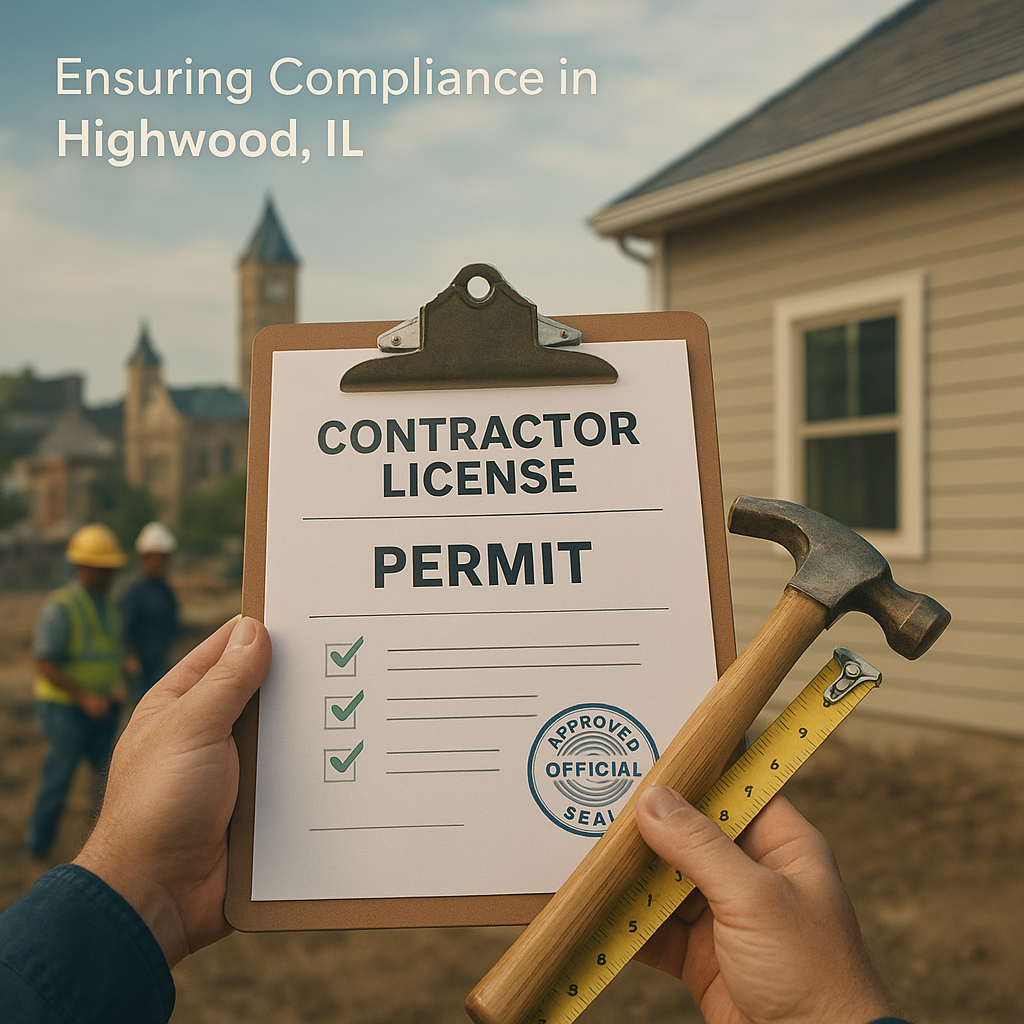
If you’re a contractor in Highwood, Illinois—especially a siding contractor—you’ve probably heard the words “license,” “permit,” and “bond” more times than you can count. Maybe you’re new to working in the city, or maybe you’re a homeowner trying to make sense of what your contractor needs before the first nail goes in. Either way, the process can feel a little like a maze.
But here’s the good news: Highwood’s contractor licensing and permit requirements aren’t meant to trip you up. They’re there to protect property owners, keep construction safe, and make sure every project follows local building codes. Once you understand the basics, the path becomes much clearer.
This guide breaks down contractor licensing, permitting, and bonding in Highwood, Illinois, in plain, everyday language. We’ll pay special attention to siding contractors and that important phrase many people see on their paperwork: Compliance Only.
Why Contractor Licensing and Permits Matter in Highwood, Illinois
The City of Highwood, Illinois, is a small but active community along the North Shore. Like most municipalities, Highwood requires contractors to follow specific rules before starting work. These rules aren’t just bureaucratic hoops. They help ensure that projects are safe, properly built, and up to current code.
Think of a contractor license as a formal introduction between the contractor and the city. It says, “I’m a professional, I meet the basic requirements, and I’m authorized to do this type of work here.”
A permit, on the other hand, is permission for a specific project at a specific address. For example, if you’re replacing siding on a home near downtown Highwood, you may need a permit before removing the old material. That permit tells the city what you’re doing, where you’re doing it, and that it will be inspected for compliance.
Without these steps, projects can face stop-work orders, fines, and even legal trouble. More importantly, unpermitted work can put occupants and future buyers at risk if something wasn’t installed correctly.
What Is a Contractor License and Permit Bond in Highwood?
A contractor license and permit bond is a common requirement in many Illinois communities, including Highwood. It’s not insurance in the traditional sense. Instead, it’s a financial guarantee that the contractor will follow the rules set by the city.
Imagine you’re renting an apartment and you put down a security deposit. The landlord holds that deposit to make sure you follow the lease. If you break the rules, the landlord can use the money to cover the damage. A contractor bond works in a similar way, but the city is the one holding the guarantee.
If a contractor violates local building codes, fails to pull a required permit, or doesn’t follow Highwood’s regulations, a claim can be made against the bond. The bond company may pay out, and the contractor is then responsible for repaying that amount.
This bond helps the city protect the public while holding contractors accountable for their work and their paperwork.
Siding Contractor Compliance in Highwood
If you’re a siding contractor, you may see the term Compliance Only tied to your bond or license requirement. This can confuse people because it sounds like something is missing. In reality, “compliance only” simply describes the scope of the bond.
A compliance-only bond focuses on following local rules, building codes, and permit conditions. It does not necessarily cover the quality of workmanship or whether the siding itself holds up over time. That’s what warranties and workmanship guarantees are for.
For example, let’s say a siding contractor in Highwood obtains a compliance-only bond and begins a vinyl siding replacement. If the contractor fails to follow the city’s code for weatherproofing or skips a required inspection, the bond may respond. But if the siding color fades a year later, that’s not a bonding issue—it’s a product or workmanship concern.
This distinction is important. It helps contractors understand exactly what they’re buying and helps homeowners understand what protections are actually in place.
How to Get Licensed and Pull a Permit in Highwood
Every contractor’s path looks a little different depending on the type of work, but the general process in Highwood usually follows a similar pattern.
Step 1: Check the City’s Requirements
Start by contacting the City of Highwood or visiting its official website. Ask about contractor licensing requirements for your specific trade. Not all trades have the same rules, and siding work may fall under a specific category that requires a compliance-only bond.
Step 2: Complete a Contractor License or Registration
If Highwood requires you to register or hold a contractor license, fill out the appropriate application. You may need to provide basic business information, proof of insurance, and details about your trade. This helps the city keep a record of who is working within its boundaries.
Step 3: Secure the Required Bond
If a contractor license and permit bond is required, you’ll need to purchase it from a surety bond company. The bond amount will depend on the city’s requirements and sometimes the project’s scope. The cost you pay, known as the premium, is typically a small percentage of the bond amount.
Step 4: File the Bond and Paperwork with the City
Once the bond is issued, you’ll file it with the City of Highwood along with your license application or permit request. This is often the step that takes the longest, so it helps to prepare early.
Step 5: Apply for the Specific Permit
Each project generally needs its own permit. Provide the project address, scope of work, and any required drawings or specifications. For siding projects, the city may want to know what materials you’re using and whether the home is in a historic district.
Step 6: Schedule Inspections
After the permit is issued, the work can begin. But don’t forget inspections. Highwood may require inspections at certain stages, such as after removing old siding or before installing the final layer. Passing these inspections shows compliance with local building codes.
Common Mistakes Contractors Make in Highwood
Even experienced contractors can run into trouble if they overlook the small details. Here are some common pitfalls to avoid.
- Skipping the permit altogether. Some people assume small siding repairs don’t need a permit. Always check first. In Highwood, even minor exterior work may require approval.
- Assuming one license covers every city. Just because you’re licensed in a neighboring town doesn’t mean Highwood automatically accepts it. Municipalities in Illinois often have their own requirements.
- Confusing insurance with a bond. Liability insurance protects against accidents. A bond protects the city and the public against code and permit violations. You may need both.
- Letting the bond lapse. Some bonds are annual, while others may need renewal. If your bond expires, your license or permit could become invalid.
- Not keeping paperwork on site. You should be able to show your license, permit, and proof of bonding if a city official stops by.
Why Compliance Matters for Homeowners Too
If you’re a homeowner in Highwood, you might wonder why any of this matters to you. The answer is simple: hiring a properly licensed and bonded contractor protects you from many headaches.
When a contractor follows the city’s licensing and permit process, you know the work is being done with oversight. Inspectors review key stages of the project. The bond provides a layer of financial protection if the contractor ignores local requirements.
Before hiring anyone, ask these questions:
- Are you licensed to work in Highwood, Illinois?
- Will you pull the necessary permits for this project?
- Do you carry a contractor license and permit bond?
- What type of bond is it, and what does it cover?
If a contractor hesitates to answer or says permits aren’t needed, that’s a red flag. Take a step back and verify the information with the city directly.
Frequently Asked Questions About Highwood Contractor Bonds
Do all contractors in Highwood need a bond?
Not necessarily. Bond requirements often depend on the type of work and the city’s current ordinances. Siding contractors and other exterior trades may be required to carry a compliance-only bond as part of their licensing. Always verify with the City of Highwood before assuming you don’t need one.
How much does a contractor license and permit bond cost?
The premium is usually a small percentage of the total bond amount. Factors like your credit score, business experience, and the bond type can influence the cost. For many contractors, the premium is affordable relative to the protection it provides.
Is a compliance-only bond enough for a siding project?
For city licensing and permit purposes, a compliance-only bond may be exactly what Highwood requires. However, it’s not a substitute for liability insurance or a workmanship warranty. Homeowners should still ask about warranties and insurance separately.
What happens if a contractor violates the bond terms?
If the contractor fails to follow local codes or permit conditions, a claim can be filed against the bond. The surety company investigates, and if the claim is valid, it may pay out up to the bond amount. The contractor then reimburses the surety company for that payout.
Final Thoughts on Highwood Contractor Licensing and Permits
Working in Highwood, Illinois, doesn’t have to be complicated. Whether you’re a siding contractor preparing for your next project or a homeowner checking credentials, the key is understanding the basics. A contractor license shows you’re eligible to work. A permit gives you permission for a specific job. A contractor license and permit bond—especially a compliance-only bond—adds a layer of accountability.
When everyone follows the process, projects run more smoothly, inspections go better, and the finished work meets local standards. So before you tear off that old siding or sign a contract, take a few minutes to confirm the licensing and permit requirements with the City of Highwood. It’s a small step that can save big trouble later.