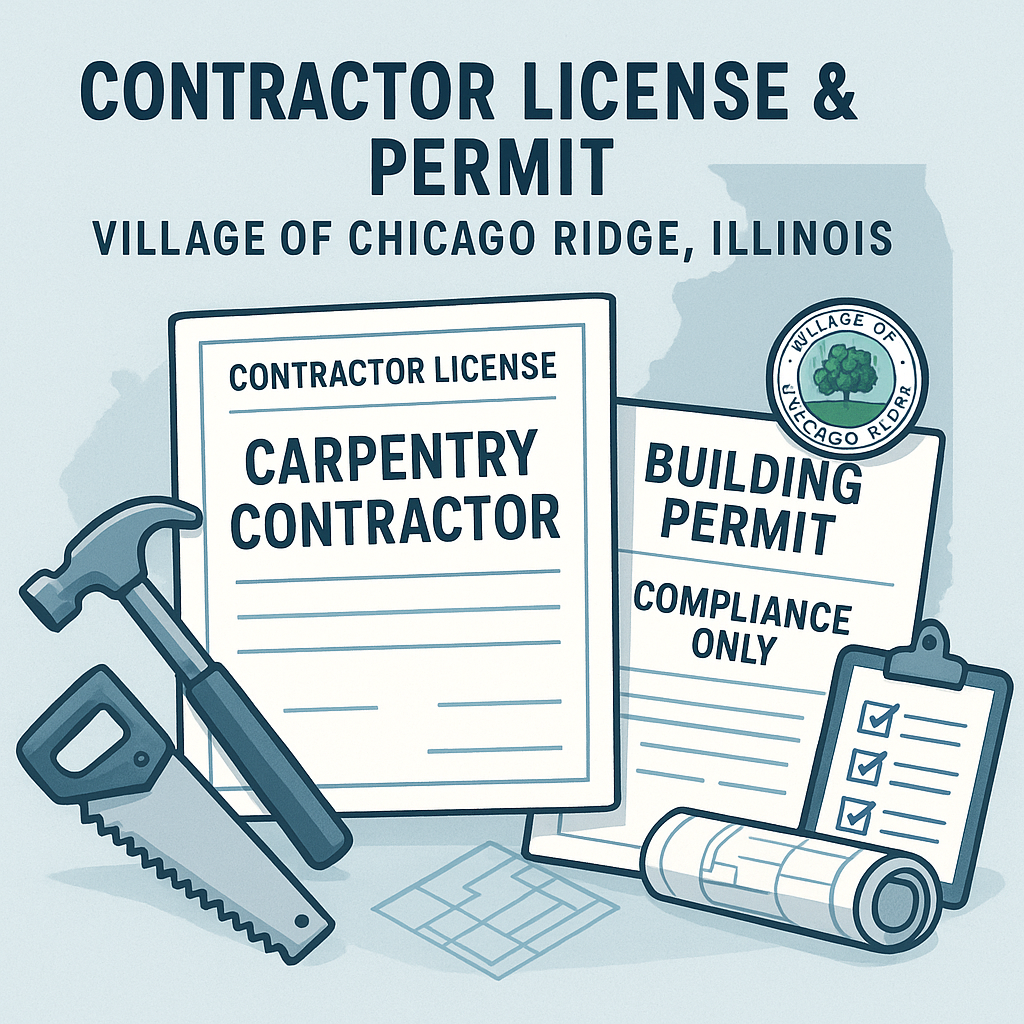
If you are a carpenter or general contractor planning to work in the Village of Chicago Ridge, Illinois, you may have seen the phrase “Contractor License & Permit Bond” and wondered what it means. You are not alone. Local licensing rules can feel confusing, especially when each town or village has its own way of doing things. The good news is that understanding contractor licensing and permits in Chicago Ridge, Illinois, is simpler than you might think.
Whether you are building a deck, finishing a basement, or handling trim work, the Village of Chicago Ridge wants to make sure contractors follow local rules. That is where the contractor license and permit bond comes into play. Let’s break it down step by step.
What Is a Contractor License and Permit Bond?
A contractor license and permit bond is a type of financial guarantee. Think of it as a promise backed by money. The village asks contractors to obtain this bond before they can get licensed or pull certain permits. The bond helps make sure the contractor will follow local building codes, zoning rules, and permit requirements.
It is important to know that this bond does not work like typical insurance. Instead, it protects the public by providing a way to recover money if a contractor breaks the rules. For example, if a contractor does work without the proper permit or ignores a stop-work order, a claim could be filed against the bond.
What Does “Carpentry Contractor – Compliance Only” Mean?
When you see “Carpentry Contractor – Compliance Only” attached to a bond requirement, it tells you the bond is focused on compliance with local rules. It is not the same as a performance bond, which would guarantee the finished quality of the work.
In other words, the Village of Chicago Ridge contract license and permit bond for a carpentry contractor is there to help ensure you follow the rules, not to judge how well you swing a hammer. This is a key difference that often confuses contractors and homeowners alike.
Why Chicago Ridge Requires These Bonds
You might wonder why a local government would require a bond at all. The answer comes down to protection and accountability. Chicago Ridge, like many communities in Illinois, uses these bonds to create a safer and more organized building environment.
Protecting Homeowners and the Community
Imagine you hire someone to build a porch, and that person starts work but never pulls the required permit. Later, you discover the work did not meet local code. The bond can offer a path to address that financial harm. It is a safety net for the people who live and work in the Village of Chicago Ridge.
Keeping Contractors Accountable
When a contractor knows a bond is in place, there is extra motivation to follow the rules. It is like having a referee on the field. The village does not need to watch every single job. The bond helps encourage good behavior because breaking the rules can have real financial consequences.
How the Bond Works for a Carpentry Contractor
Let’s use a practical example. Suppose you are a carpenter in the Village of Chicago Ridge, Illinois, and you are hired to install custom kitchen cabinets. Before you begin the job, the village requires you to have a contractor license. Part of that licensing process may include securing a contractor license and permit bond.
Here is how the bond works in everyday terms:
- You apply for a license through the Village of Chicago Ridge.
- The village tells you that a compliance-only bond is required for your carpentry work.
- You purchase the bond from a surety company. You typically pay a small percentage of the bond amount, not the full amount.
- Once the bond is active, you submit proof to the village.
- You can then move forward with your license or permit application.
If you follow the rules, nothing else happens. The bond remains in the background. If you violate local contractor regulations, a claim can be filed. The surety company may pay out on the claim, but you are generally responsible for paying that money back.
Bond vs. Insurance: What’s the Difference?
This is one of the most common questions contractors ask. A bond and an insurance policy are not the same thing, even though people often use the words together.
Think of insurance like an umbrella. It protects you from unexpected storms, such as property damage or injuries on the job. A bond, on the other hand, is more like a deposit on a promise. It assures the village that you will play by the rules.
For a carpentry contractor in Chicago Ridge, having both can be important. The bond satisfies the village’s licensing requirement. General liability insurance helps protect your business if something goes wrong on the job site. One does not replace the other.
Steps to Meet Chicago Ridge Contractor Requirements
If you are ready to work as a carpenter in the Village of Chicago Ridge, State of Illinois, following a clear checklist can save time and reduce stress. Here are the typical steps to get on the right track:
- Contact the Village of Chicago Ridge to confirm the current contractor license and permit bond requirements.
- Determine the correct bond type for your work. For many carpentry jobs, this will be a compliance-only bond.
- Gather your business information, including your license number if you already have one.
- Apply for the bond through a licensed surety company.
- Pay the bond premium, which is usually a small fraction of the total bond amount.
- Submit your bond certificate to the village along with any other required paperwork.
- Keep your bond active and renew it on time to avoid interruptions in your ability to work.
Because local rules can change, it is always smart to verify the exact steps with the Village of Chicago Ridge directly. The village office can provide the most up-to-date forms, fees, and bond amounts.
Common Questions About Contractor License Bonds
Let’s look at a few questions that often come up when contractors learn about these requirements.
Does a Compliance-Only Bond Cover Bad Workmanship?
No. A compliance-only bond for a carpentry contractor is not designed to pay for poor quality work. It is designed to cover violations of local codes, permit rules, or other compliance requirements. If a homeowner is unhappy with the way a cabinet was installed, that is usually a separate matter between the contractor and the customer.
How Much Does the Bond Cost?
The cost depends on the bond amount required by the Village of Chicago Ridge and your personal credit history. Many contractors pay only a small percentage of the total bond amount. If the bond is $10,000, for example, your premium might be a few hundred dollars. Exact amounts vary, so it is best to get a quote.
How Long Does the Bond Need to Stay Active?
In most cases, the bond must stay active for as long as you hold the contractor license. If you let the bond lapse, the village may suspend or revoke your ability to work. Treat your bond renewal like any other important business deadline.
Final Thoughts
Understanding contractor licensing and permits in Chicago Ridge, Illinois, does not have to feel overwhelming. For carpentry contractors, the key point is simple. The Village of Chicago Ridge requires a contractor license and permit bond to help ensure everyone follows the rules. The “compliance only” bond is a focused tool that protects the public and keeps contractors accountable.
If you are a carpenter planning to work in Chicago Ridge, start by checking with the village. Confirm the bond type, amount, and any other requirements. Then secure the bond from a trusted surety provider. Once your paperwork is in order, you can focus on what you do best: delivering quality carpentry work for your clients.
By staying informed and keeping your bond active, you protect your business, your customers, and your reputation in the Village of Chicago Ridge, Illinois.