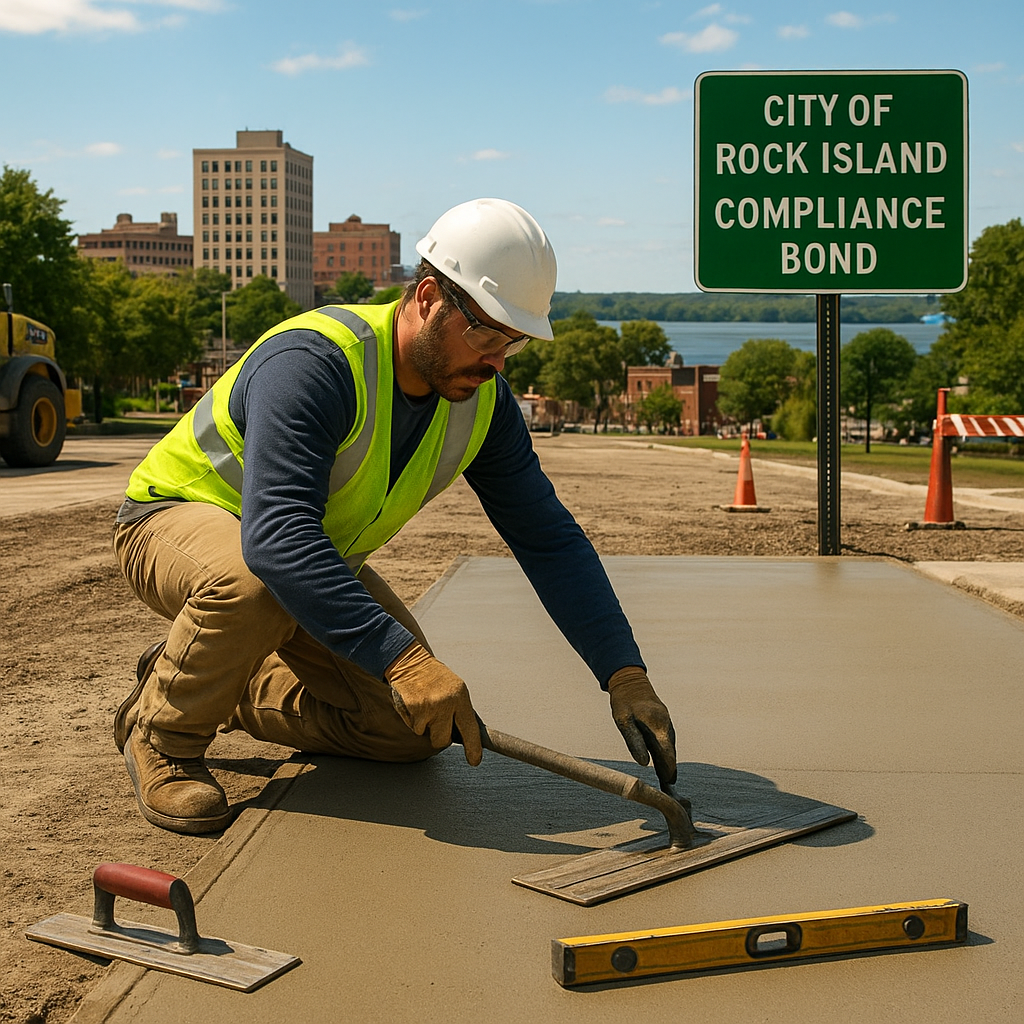
If you’re a cement contractor working in Rock Island, Illinois, you know the drill. Every city has its own set of rules, and Rock Island is no different. One requirement that often catches people off guard is the Concrete Flatwork Bond. It might sound like just another piece of paperwork, but it’s actually a key part of staying compliant and keeping your projects moving forward.
Whether you’re pouring sidewalks, driveways, patios, curbs, or gutters, understanding this bond can save you time, money, and a few headaches down the road. Let’s break it down in plain English.
What Is a Concrete Flatwork Bond?
A Concrete Flatwork Bond is a type of surety bond required by the City of Rock Island, Illinois. In simple terms, it’s a promise backed by a third party that you will follow the city’s rules while doing concrete flatwork.
Think of it like a security deposit. When you rent an apartment, you put down money to show you’ll take care of the place. If you break the rules, the landlord can use that deposit. A bond works in a similar way, but instead of handing over cash upfront, you pay a small premium to a surety company. That company then guarantees to the city that you’ll comply with local codes and regulations.
There are three parties involved in a surety bond:
- The principal – That’s you, the contractor.
- The obligee – The City of Rock Island, which requires the bond.
- The surety – The company that backs your promise financially.
If you fail to meet the city’s requirements, the surety may pay out a claim, but remember: you’ll ultimately be responsible for repaying that amount. A bond is not a free pass—it’s a serious commitment.
Why the City of Rock Island Requires This Bond
You might wonder, “Why does the city care so much about concrete?” The answer is simple. Concrete flatwork plays a huge role in public safety and infrastructure. Sidewalks need to be even and accessible. Curbs and gutters must drain properly. Driveways and patios have to meet specific standards so they last through the seasons.
Rock Island sits along the Mississippi River and experiences real Midwestern weather. Freeze-thaw cycles can be tough on concrete. If a job is done poorly, cracks and uneven surfaces can appear quickly. That becomes a hazard for pedestrians, drivers, and property owners.
The city uses the bond requirement as a way to hold contractors accountable. It encourages proper workmanship and ensures that contractors follow the municipal code. Ultimately, it’s about protecting the community and keeping public spaces safe.
Who Needs a Concrete Flatwork Bond in Rock Island?
If you are a cement contractor planning to do any concrete flatwork within the City of Rock Island, you will likely need this bond. That includes:
- General contractors who take on concrete projects.
- Subcontractors specializing in sidewalks, driveways, or patios.
- New contractors applying for a local license.
- Established contractors renewing their city registration.
Even if you’ve done concrete work for years, the city may still ask for proof of bonding before issuing a permit. It’s best to check with the Rock Island building department early in the process. That way, you won’t be stuck waiting at the last minute.
What Does “Compliance Only” Mean?
You might see the phrase “Compliance Only” attached to this bond. That’s an important detail. A compliance bond guarantees that you’ll follow the city’s rules and regulations. It does not necessarily protect a homeowner from poor workmanship or financial loss.
Let’s say a homeowner hires you to pour a new driveway. If the driveway cracks three months later because of bad materials, a compliance bond might not cover that damage. Instead, the bond comes into play if you violate a city ordinance—for example, you fail to obtain the right permit, don’t follow approved plans, or leave a sidewalk in a dangerous condition after being notified.
In that case, the city can file a claim against your bond. The surety company investigates. If the claim is valid, the surety pays the city, and you must repay the surety. It’s a strong incentive to stay on the right side of local rules.
How to Get Your Rock Island Concrete Flatwork Bond
Getting bonded is usually faster and easier than most contractors expect. Here’s a straightforward path you can follow:
- Confirm the required bond amount. The City of Rock Island will specify how much coverage you need. Amounts can vary based on the scope of work.
- Reach out to a licensed surety agency. Look for a company that understands Illinois contractor bonds.
- Complete a short application. You’ll provide basic business information and possibly your social security number for a credit check.
- Pay the premium. For many contractors with good credit, the premium is between 1% and 3% of the total bond amount.
- File the bond with the city. Once approved, you’ll receive the bond form. Submit it to the Rock Island building department as part of your licensing or permit packet.
The whole process can often be done online or over the phone in a day or two. Some agencies even offer instant quotes for smaller bonds.
Common Mistakes to Avoid
Dealing with bonds can feel like navigating a maze. Here are some common mistakes contractors make—and how you can avoid them.
Assuming a Bond Is the Same as Insurance
This is a big one. Insurance protects you and your business from accidents or unexpected events. A bond protects the city and the public. They serve different purposes. You may need both to fully protect your operation.
Letting the Bond Lapse
Most bonds need to be renewed annually or for the duration of your license. If your bond expires and you keep working, you could face fines or lose your permit. Set a reminder well before the expiration date.
Using the Wrong Bond Amount
Always confirm the exact amount required by the City of Rock Island. Using a lower amount could delay your permit. Using a higher amount means you’re paying more than necessary.
Waiting Until the Last Minute
Projects often have tight timelines. If you wait until the day before a job starts to get bonded, you’re adding unnecessary stress. Start the bonding process early, especially if you have credit issues that might slow things down.
How Much Does a Concrete Flatwork Bond Cost?
The cost depends on two main factors: the required bond amount and your personal credit score. For example, if the city requires a $10,000 bond and you have good credit, your premium might be $100 to $300 per year. If your credit is less than perfect, the premium could be higher, but many surety companies offer programs for all credit types.
It’s helpful to remember that the premium is a small price to pay for the ability to work legally in Rock Island. It also shows clients and city officials that you take your responsibilities seriously.
Why This Matters for Your Business
At the end of the day, the Concrete Flatwork Bond is about trust. The city trusts that you’ll follow the rules. Homeowners trust that the city has vetted you. And you can trust that you’re operating on solid ground—pun intended.
If you’re new to Rock Island, or new to the bonding process, don’t let the terminology scare you off. A quick conversation with a surety professional can answer your questions and help you get compliant fast.
Ask yourself: Is it worth risking a project delay or a fine over a bond that often costs less than a tank of gas? Probably not. Get the right bond in place, keep it active, and focus on pouring quality concrete that stands up to Illinois weather.
Final Thoughts
Staying compliant with the City of Rock Island’s concrete flatwork requirements doesn’t have to be complicated. The bond exists to keep everyone safe and accountable. Once you understand how it works, it becomes just another step in your project checklist.
So, if you’re planning concrete flatwork in Rock Island, reach out to a licensed surety agency today. Confirm your bond amount, get your paperwork filed, and get back to doing what you do best—building solid surfaces that serve the community for years to come.